
Automatic Target Tracking (Local Tracking)
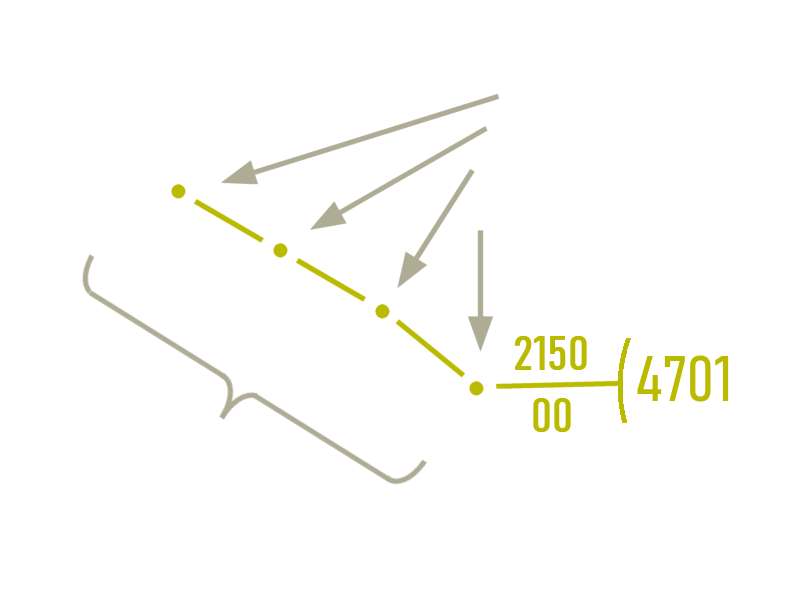
Figure 1. The terms “Plot” and “Track” were already used in the days of manual target plotting on a plotting board
Figure 1. The terms “Plot” and “Track” were already used in the days of manual target plotting on a plotting board
Automatic Target Tracking (Local Tracking)
Automatic target tracking (local tracking) is a process in which a radar autonomously determines and continuously updates the position and motion state of a detected object from successive measurements. Position reports belonging to the same target are combined into a target track, commonly referred to as a track. This track can be used to determine the target's course, speed, and predicted future position, among other information.
A plot is initially an observation report derived from a radar measurement. It may contain the measured range and angular position of a possible target, together with additional information such as elevation angle, radial velocity, signal strength, and a time stamp. A single plot, however, does not yet provide reliable information about how the target is moving. Only by associating several successive observations can a radar tracker establish a continuous track. These terms originated in the days of manual target plotting and are still used in modern automatic tracking systems.
Modern radars can automatically generate plots and tracks from received radar echo signals. In ground-based air surveillance, measurements from primary surveillance radars and information obtained through secondary surveillance radar interrogations may be used for this purpose. Target tracking provides air traffic controllers and other users with continuously updated information about the positions and movements of detected aircraft. Marine radars also track targets automatically and can use their motion data to calculate the predicted minimum separation during an encounter, known as the Closest Point of Approach (CPA), and the time remaining until that point, known as the Time to Closest Point of Approach (TCPA). This functionality in marine radars is referred to as Automatic Radar Plotting Aid (ARPA). It must be distinguished from airborne collision avoidance systems such as TCAS or ACAS, which primarily evaluate signals from other aircraft's transponders and operate independently of ground-based radar target tracking.
A track contains considerably more information than a single plot. In addition to the estimated target position, velocity components and, where appropriate, acceleration components can be combined into a so-called state vector. This vector describes the currently estimated motion state of the target. Additional information about estimation accuracy, track quality, and the target's track history may also be stored. The radar tracker must distinguish between directly measured values and quantities calculated from several observations. The state vector can also be used to predict the target's next position.

antenna revolution time, or
plot/track update time
Figure 2: Position prediction from successive observations as the basis for the acceptance gate

antenna revolution time, or
plot/track update time
Figure 2: Position prediction from successive observations as the basis for the acceptance gate
Automatic target tracking must evaluate a large number of observation reports and associate them with previously detected targets in the shortest possible time. This becomes particularly difficult when a target performs unexpected maneuvers, when several targets are close together, or when stationary reflectors and interference produce additional observation reports. A temporarily missing radar echo must not necessarily result in the loss of a track. Since a radar tracker often has to track several hundred targets simultaneously, efficient algorithms and sufficient computing power are essential.
Data Association and Acceptance Gates
One of the most important tasks of a radar tracker is data association. This process determines which newly received plot belongs to which existing track. The tracker cannot rely solely on the distance between two measured positions. It therefore also considers the target's previously estimated motion state and first predicts its probable position at the time of the next observation. An acceptance gate is established around this predicted position. A new plot within this gate is considered a possible candidate for updating the track.
The size and shape of the acceptance gate depend on several factors. These include the target's previous velocity, possible accelerations and maneuvers, the time interval until the next measurement, and the accuracy of the previous position estimate. If the target is moving in a straight line at an approximately constant velocity, its expected position can be predicted with relatively high accuracy. However, if the target performs a sharp maneuver or more time has elapsed since the last measurement, a larger deviation from the predicted position must be allowed. Depending on the motion model and measurement uncertainty, the acceptance gate may therefore have different shapes and dimensions.
A plot within the acceptance gate is not automatically associated with the track. If several plots are located within this region, the tracker must decide which one most likely belongs to the tracked target. Conversely, a single plot may lie within the acceptance gates of several tracks. Such ambiguities can arise, for example, when two flight paths cross. Different methods may be used for data association:
- selecting the plot whose position is closest to the predicted target position;
- selecting a plot based on additional characteristics, such as signal strength or measured radial velocity;
- statistically evaluating several possible associations while accounting for measurement uncertainty.
A simple method, for example, selects the plot closest to the predicted position within the acceptance gate. Under favorable observation conditions, this may be sufficient. However, in the presence of strong stationary clutter, several closely spaced targets, or numerous false alarms, the risk of incorrect association increases. More sophisticated methods therefore consider the probabilities of possible associations. One example is the Multiple Hypothesis Tracker, which can temporarily maintain several alternative association hypotheses when the correct assignment is ambiguous.
Track Updating and Maintenance
Once a plot has been associated with an existing track, the previously estimated motion state can be compared with the new measurements and corrected. The updated state is then used to predict the target's position at the next observation. These calculations belong to state estimation and are explained in greater detail on the page about track smoothing. Thus, data association determines which plot should be used, while state estimation determines how that plot and the previously available information are combined to obtain an improved estimate of the target's motion state.
Plots that cannot be associated with an existing track are not necessarily false alarms. They may also originate from previously unknown targets and are therefore examined for their suitability for track initiation. Conversely, a track is not immediately terminated if no suitable plot is temporarily available. The radar tracker can continue to predict the target's probable position and search for a suitable association during subsequent observations. Deciding whether such a track should be continued or terminated is part of track maintenance. The interaction of these functions within the complete radar tracker is illustrated on the following page about the tracking process.