
Radial Speed

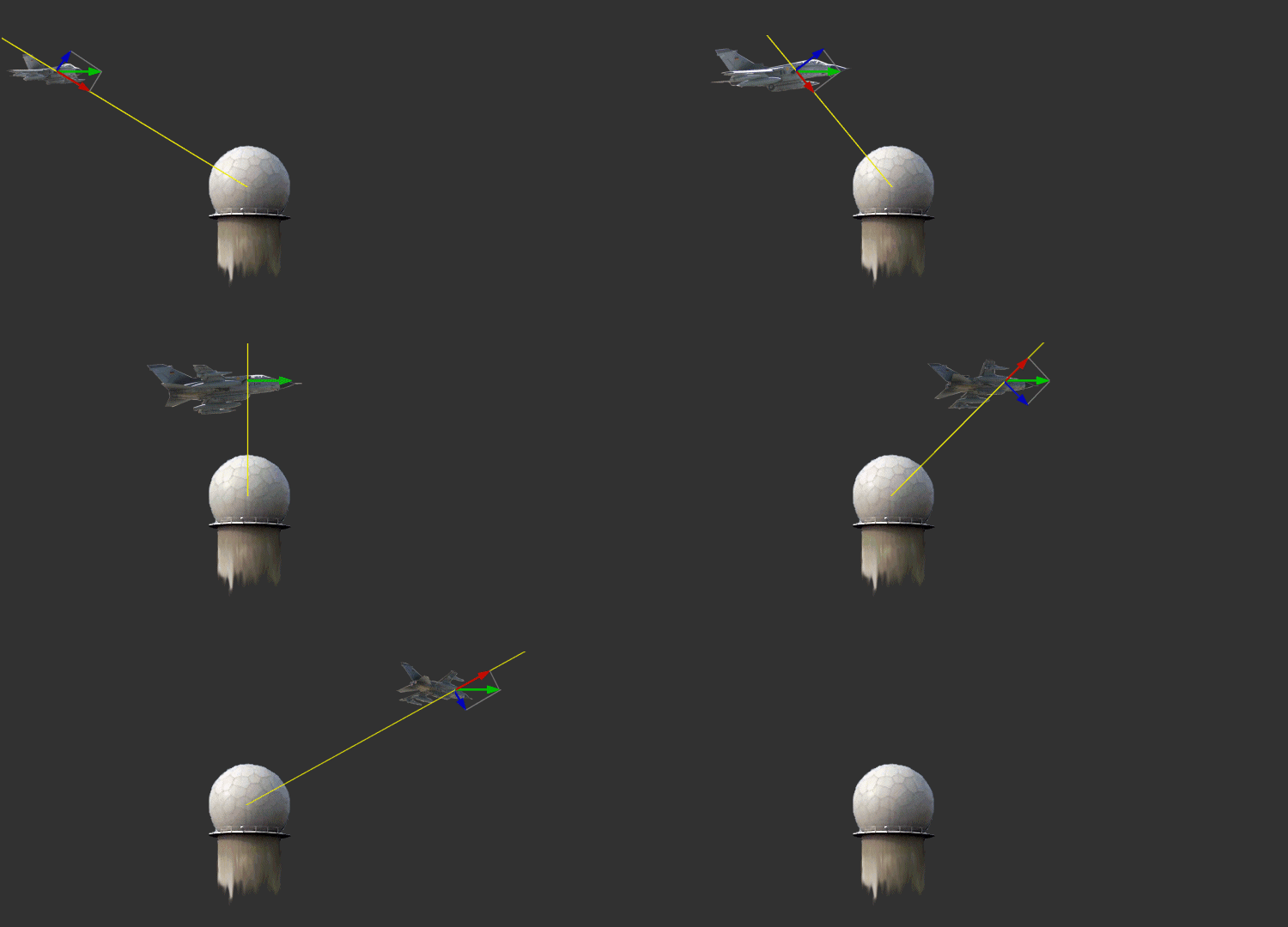
Figure 1: Velocity vectors of an aircraft relative to the radar site

Radial Speed
Every moving object has both a speed and a direction. Velocity is therefore a vector quantity. Relative to a given direction of observation, the velocity vector can be resolved into two components (the text colors correspond to the colors of the arrows in Figure 1):
- The component along the line of sight, either toward or away from the observer. This direction is called the radial direction, and the corresponding component is called radial speed.
- The component perpendicular to the radial direction. It lies along the tangent to a circle centered on the radar, with a radius equal to the target range. This component is called tangential speed.
The diagonal of the rectangle formed by these two perpendicular vectors represents the actual velocity of the observed object. The length of this vector indicates the magnitude of the velocity, while its direction corresponds to the direction of motion.
The radial speed of an aircraft is the component of its velocity directed along the line of sight toward or away from the radar.
The tangential velocity vector is perpendicular to the radial velocity vector. This component affects the antenna control of target tracking radars.
Application in Aviation
When an aircraft flies past a radar on a straight course, it reaches a point where its radial velocity is zero and its tangential velocity equals the aircraft's instantaneous velocity. The Doppler frequency is nonzero only when the radial velocity is nonzero. If the radial velocity is zero, the target's speed cannot be determined from the Doppler frequency. A moving target detection system relying exclusively on the Doppler effect therefore cannot distinguish the aircraft from a stationary target at that instant.
During straight-line flight, radial velocity depends on the angle between the direction of flight and the radar line of sight. Its absolute value is greatest when the aircraft flies directly toward or away from the radar. It becomes zero when the aircraft moves exactly perpendicular to the line of sight. For motion in a plane, this relationship is expressed as vr = v · cos θ, where the angle θ is measured between the direction of flight and the direction from the aircraft toward the radar:
- θ = 0°: maximum positive radial velocity when approaching the radar;
- θ = 90°: zero radial velocity when moving perpendicular to the line of sight;
- θ = 180°: maximum negative radial velocity when moving away from the radar.
As the aircraft continues along its straight course, its radial velocity vector points away from the radar. According to the sign convention used here, the radial velocity is now negative. Consequently, the sign of the Doppler frequency also changes. For equal absolute values of radial velocity, the magnitude of the Doppler frequency remains the same, but the direction of the phase change over time is reversed. The sign of the Doppler frequency can be determined, for example, by I/Q demodulation.
If an aircraft flies around the radar along a circular path while maintaining a constant range, its radial velocity remains zero throughout the flight. In this case, no Doppler frequency occurs, and the aircraft's echo may be suppressed by the MTI filter in the same way as a stationary target.
When considering motion in three-dimensional space, radial velocity also depends on the aircraft's altitude. However, at an approximately constant altitude, this effect is usually small because the distance to the radar is generally much greater than the aircraft's altitude.
Application in Meteorology
A Doppler weather radar also measures only the component of motion along its line of sight. When observing areas of precipitation, it can determine the radial velocity of raindrops and thus approximately measure one component of the wind velocity.

Figure 2: Radial components of wind moving in a constant direction

Figure 2: Radial components of wind moving in a constant direction
Figure 2 illustrates wind moving in a uniform direction, represented by the green arrows. The radar is located at the center of the image and observes the motion from different directions. The yellow lines indicate some of the radar viewing directions, while the red arrows represent the corresponding measurable radial velocity components. The absolute values of these components are greatest when the wind direction is parallel to the radar line of sight. They become zero when the wind moves perpendicular to the line of sight.
A single measurement of radial velocity therefore cannot directly provide the complete wind velocity vector, including both its magnitude and direction. Only by analyzing measurements from different directions can information about the wind field be obtained under suitable conditions.

Figure 3: Radial velocity display of a Doppler weather radar
Figure 3 shows a color-coded representation of the measured radial velocities of precipitation particles. The radar is located at the center of the image. In the color scheme used here, blue and green indicate motion toward the radar, while red indicates motion away from the radar. The gray area extending from left to right represents radial velocities close to zero.
Raindrops are carried along by the wind. Their horizontal motion therefore approximately follows the motion of the surrounding air. However, at larger antenna elevation angles, the falling velocity of the raindrops may also contribute to the measured radial velocity.
In practice, interpreting these measurements is more complicated because wind speed and direction may vary from one location to another and with altitude. In extensive areas of relatively uniform precipitation, measurements at different ranges and elevation angles can provide information about the vertical wind profile under suitable conditions. In some respects, this is comparable to the information obtained from a radiosonde ascent.
During thunderstorms, Doppler weather radars can detect rotational air movements that may, for example, indicate the development of a tornadic circulation. Suitable radial velocity displays can also reveal areas of convergence and divergence and the associated strong air movements.
Precipitation echoes are generally needed to measure wind over large areas. Near the ground, however, a sensitive weather radar may also receive echoes from insects even when no precipitation is present. Their movement can provide information about the advance of sea-breeze fronts or gust fronts associated with thunderstorms.
The additions concerning the meteorological applications of radial velocity are based on the technical contributions of Pierre Vaillant. Many thanks to him for this valuable extension of the article!