Tracking radar
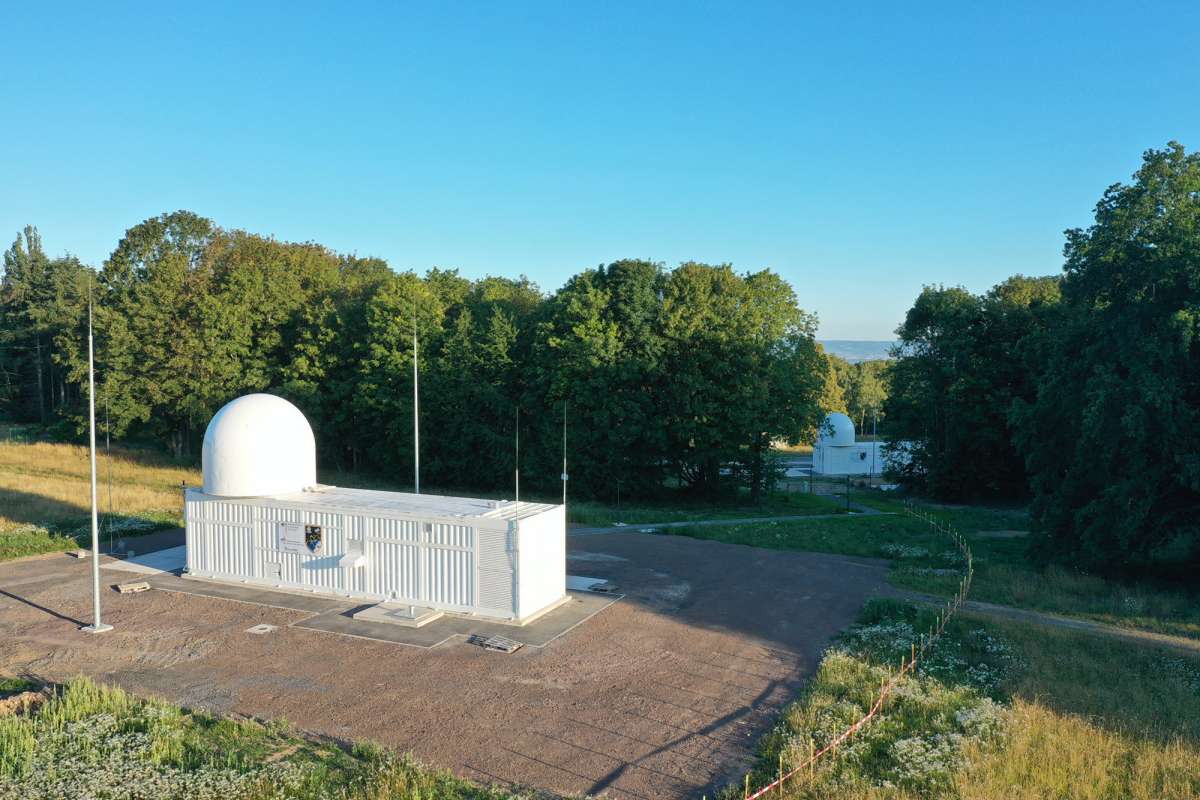
A tracking radar is a specialized type of radar that continuously tracks a specific target once it has been detected. The main lobe of the antenna pattern is aligned in that one direction. It continuously measures the position (distance, angle, and, if necessary, speed) of a single object, thus differing from reconnaissance and target assignment radars, which scan a larger area for potential targets.

Figure 1: In conical scan, the antenna pattern rotates around a central axis.
Special target tracking radars are categorized according to their technology into:
- Radar sets with conical scan and
- Radar sets with monopulse processing.

Figure 2: Principle of a monopulse antenna with sum and difference channels.

More modern military multifunction radars with phased-array antennas and fast data refresh rates can perform target searches and target tracking simultaneously. This has become standard today, but in the past, it was referred to as the special quality feature track-while-scan (TWS).
Tracking radars are primarily used in air defense to counter enemy missiles or aircraft. Their maximum range is matched to that of the associated countermeasures (missiles, anti-aircraft artillery). Tracking radars with extremely long ranges are vital for measuring satellite orbits and locating and measuring space debris.