
Type 57
Description of the radar set, tactical-technical characteristics
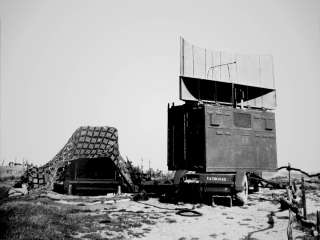
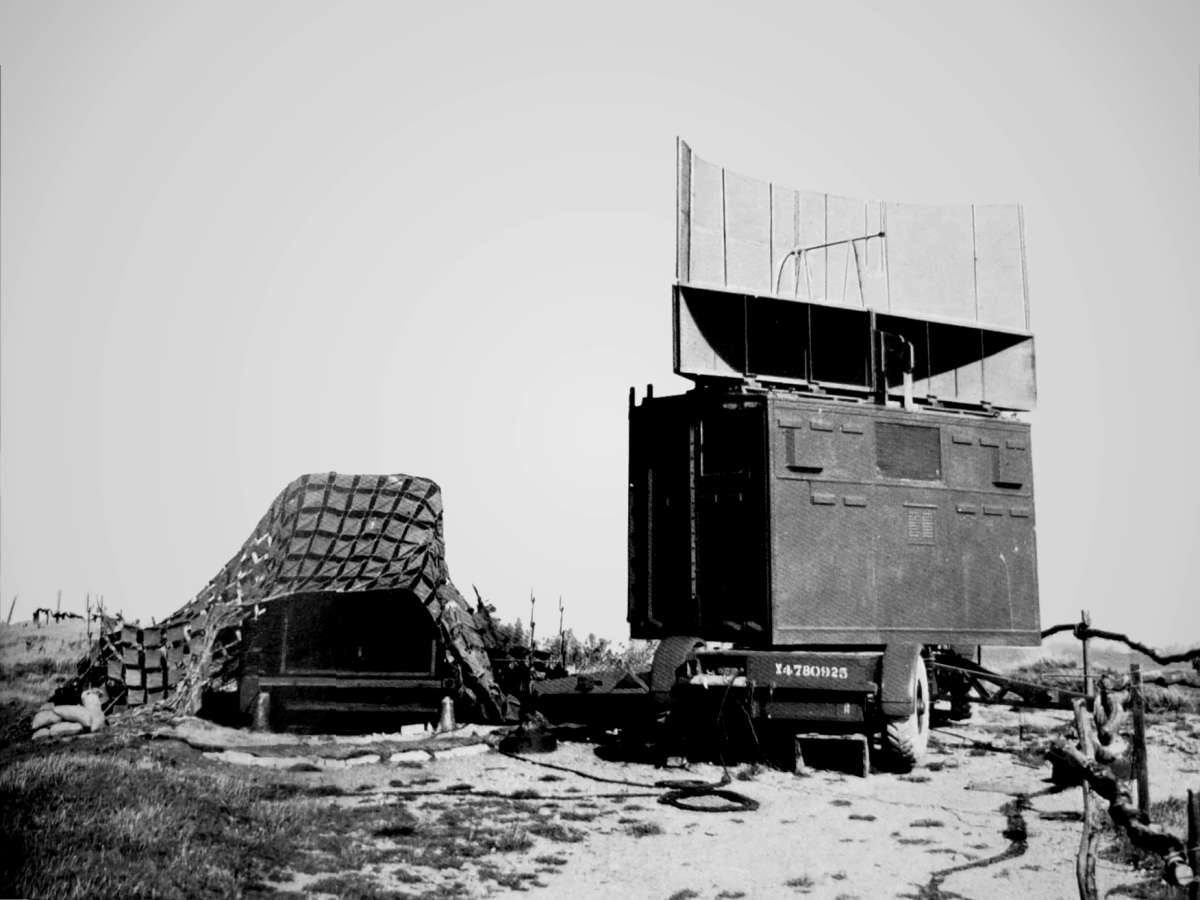
Figure 1: Type 57
| Specifications | |
|---|---|
| frequency: | 3 GHz
(S band) |
| pulse repetition time (PRT): | |
| pulse repetition frequency (PRF): | 1 kHz |
| pulsewidth (τ): | 2 µs |
| receiving time: | |
| dead time: | |
| peak power: | 500 kW |
| average power: | |
| instrumented range: | 40 NM (≙ 74 km) |
| range resolution: | |
| accuracy: | |
| beamwidth: | 1° |
| hits per scan: | |
| antenna rotation: | |
| MTBCF: | |
| MTTR: | |
Type 57
The Type 57 (also known as Type 14 Mark Ⅱ) was a transportable coastal surveillance radar operating in the S band (IEEE designation) or in the E/F band (NATO designation) used by the British coastal defense system Chain Home Extra Low (CHEL) to detect very low-flying aircraft.
Type 57 was a portable radar with a horizontal cheese antenna mounted on a trailer containing the transmitter, receiver, and two operator workstations. It was powered by two horn radiators mounted one above the other and connected in parallel via a T-junction. Above the cheese antenna was the IFF Mark III antenna with a grid reflector, fed by a dipole. The antenna was permanently attached to the roof of the cabin. The entire cabin could be manually steered at the bearing angle in a 270° sector. The steering was controlled by one of the operators.