
Anti-Radiation Missiles

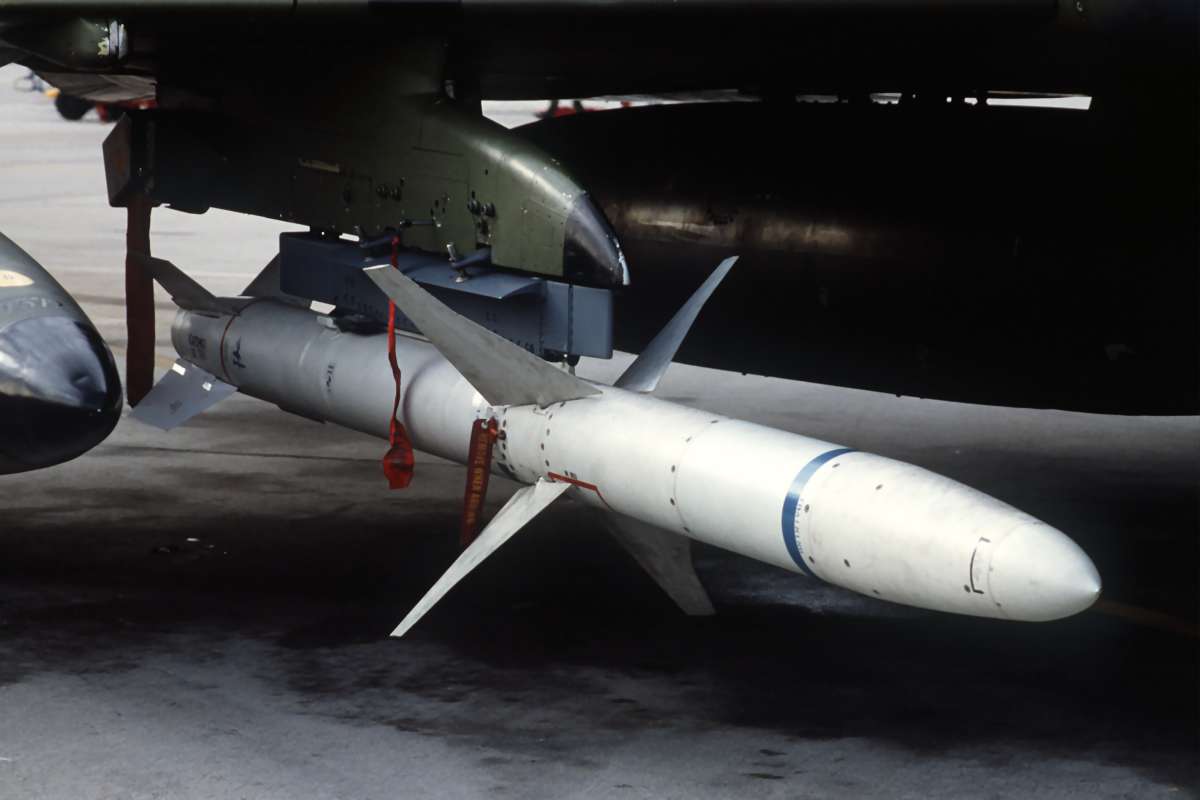
Figure 1: AN/AGM-88 HARM on an F-4G
Anti-Radiation Missiles
Anti-Radiation Missiles (ARM) are a type of electronic attack (EA or ECM) with a destructive effect. They are directed against targets emitting electromagnetic radiation, such as radar or jamming systems. In the older definition of electronic warfare (ECM), anti-radiation missiles were not included. However, in the newer definition of electronic attack (EA), these weapons are considered anti-radiation weapons (ARW).[1]
By using this type of weapon, the enemy is denied the use of the electromagnetic spectrum needed to create an image about the air situation or to interfere the enemy’s radar or communication system. The highest possible airspeed reduces the ability to defend the system under attack, but it also reduces your own maneuverability.
Classification
In the military classification system, anti-radiation missiles are divided like general missile types:
- Air-to-ground ARMs are the most common form of deployment;
- Ground-to-air ARMs. To combat radar interference from aircraft, anti-aircraft missiles have been developed that fly into the source of interference..
- Ground-to-ground ARMs, these missiles fired from ground-based launchers use a radar seeker and are therefore difficult to counter with electronic countermeasures or chaff.
- Air-to-air ARMs the most modern form, which are used against airborne radar systems or sources of interference. They have a larger range, only a very small effective Radar Cross Section (RCS), do not radiate anything themselves, and therefore aircraft radar warning systems are ineffective against them.
Simple systems
The first generation of anti-radiation missiles had a simple design. The missile’s guidance system could determine the source of the enemy’s emissions and use this position as a target point. The missile was fired in the vicinity of the enemy transmitter to disable it. The diameter of the weapon’s effect was sufficiently large to compensate for unavoidable deviations in accuracy.
A simple defense against this type of anti-radiation missile was to switch off the transmitter. In the absence of guidance information, the missile continued on its course either tumbling or with only a ballistic trajectory, greatly reducing accuracy and effectiveness, or even causing the missile to break out of its control range.
Systems with navigation systems
Subsequently, more intelligent control systems were developed, equipped with an inertial navigation system. These systems detect a radar set and save its position. If the radar is switched off, they can continue to fly towards the radar using the navigation system. Newer systems can also use the GPS signal for orientation.
However, if the target radar detects the approach of such a missile early and remains switched off for a longer period of time, there is a significantly increased probability that the missile will fly the wrong way. The conflict between Russia and Ukraine demonstrates that GPS signals can also be effectively jammed.
Systems with a delay
In certain situations, some anti-radiation missiles can be programmed to stop their approach if the radar signal is lost. For example, the British ALARM missile can climb steeply and deploy a parachute at a higher altitude if the radar signal is lost. When the radar signal is recognized, the parachute is released and the missile resumes its course toward the radar. The US AGM-136 Tacit Rainbow, produced by Northrop and now decommissioned, would have simply circled aimlessly.
Picture gallery of anti-radiation missiles




References:
- David Adamy: ’’EW 102. A Second Course in Electronic Warfare’’ Artech House Publishers, 2004, ISBN 1-58053-686-7
- David Adamy: ’’EW 104. Electronic Warfare Against a New Generation of Threats’’ EW100, 2015, ISBN 978-1-60807-869-1