
Welti Code
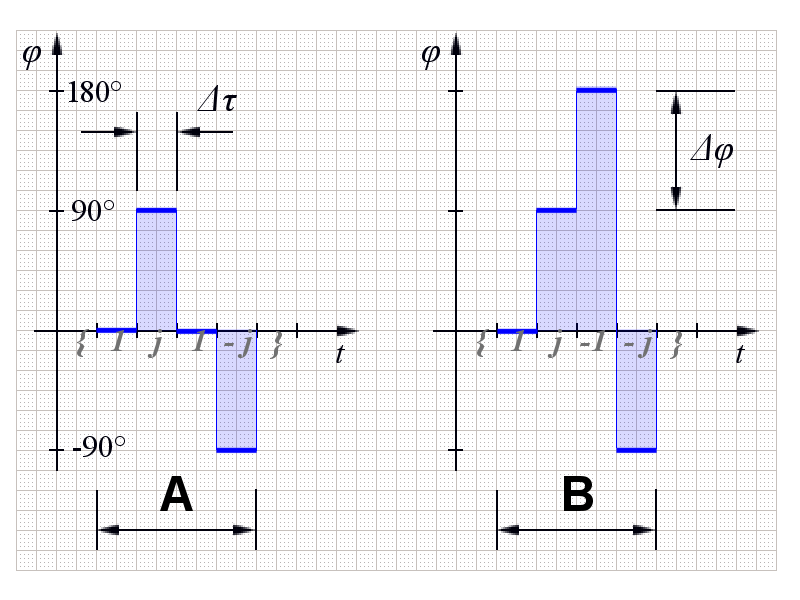
Figure 1: Sequence of Welti Codes of length 4
Welti Code
The Welti Code (also referred to as Welti sequences or quaternary codes according to George R. Welti) is a class of complementary polyphase codes used to modulate radar transmit pulses for intrapulse modulation followed by pulse compression. A relatively long transmit pulse is encoded with a phase structure so that, on reception, an extremely short and sharp pulse can be reconstructed by means of a matched filter.
The outstanding feature of the Welti Code is its complementary property. Whereas conventional phase modulations such as Barker Codes generate disturbing time sidelobes during autocorrelation, the Welti method uses sets of sequences. If these sequences are transmitted one after another, or on different frequencies, and are independently correlated in the receiver, their respective sidelobes cancel each other mathematically when summed. Ideally, only a perfect delta distribution remains — a single, maximally sharp compressed pulse.
The Welti Code usually employs quaternary phase modulation (four phase states: 0°, 90°, 180°, 270°) or higher-order polyphase modulation. The mathematical construction is based on cyclic shifts and orthogonal matrices. As a result, Welti Codes provide a high degree of flexibility with regard to code length.
A Welti Code of length 4 may, for example, look like this (see also Figure 1):
- Sequence A: [ +1, +j, +1, -j ] (corresponds to a phase sequence of [0° → 90° → 0° → 270°]
- Sequence B: [ +1, +j, -1, +j ] (corresponds to a phase sequence of [0° → 90° → 180° → 270°]
The signal response of sequence A, like the Barker Code, produces a strong main pulse in the center, but also unwanted time sidelobes to the left and right of it. The signal response of sequence B produces exactly the same strong main pulse in the center. Its sidelobes, however, are mirror-image inversions of those of sequence A. When the signal responses of sequence A and sequence B are added, the time sidelobes cancel each other completely, while the main pulse is reinforced.
In practice, Welti Codes are frequently used in modern LPI radars (Low Probability of Intercept). To further minimize the probability of detection by hostile reconnaissance receivers, Welti Codes are often combined with frequency-hopping techniques, for example with the Costas Code. The resulting signal has a so-called “thumbtack ambiguity function” (Thumbtack Ambiguity Function), which enables highly accurate simultaneous measurement of range and Doppler velocity while at the same time being extremely insensitive to electronic countermeasures (Jamming).