AI Mark IV
Description of the radar set, tactical-technical characteristics
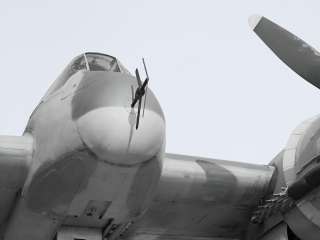
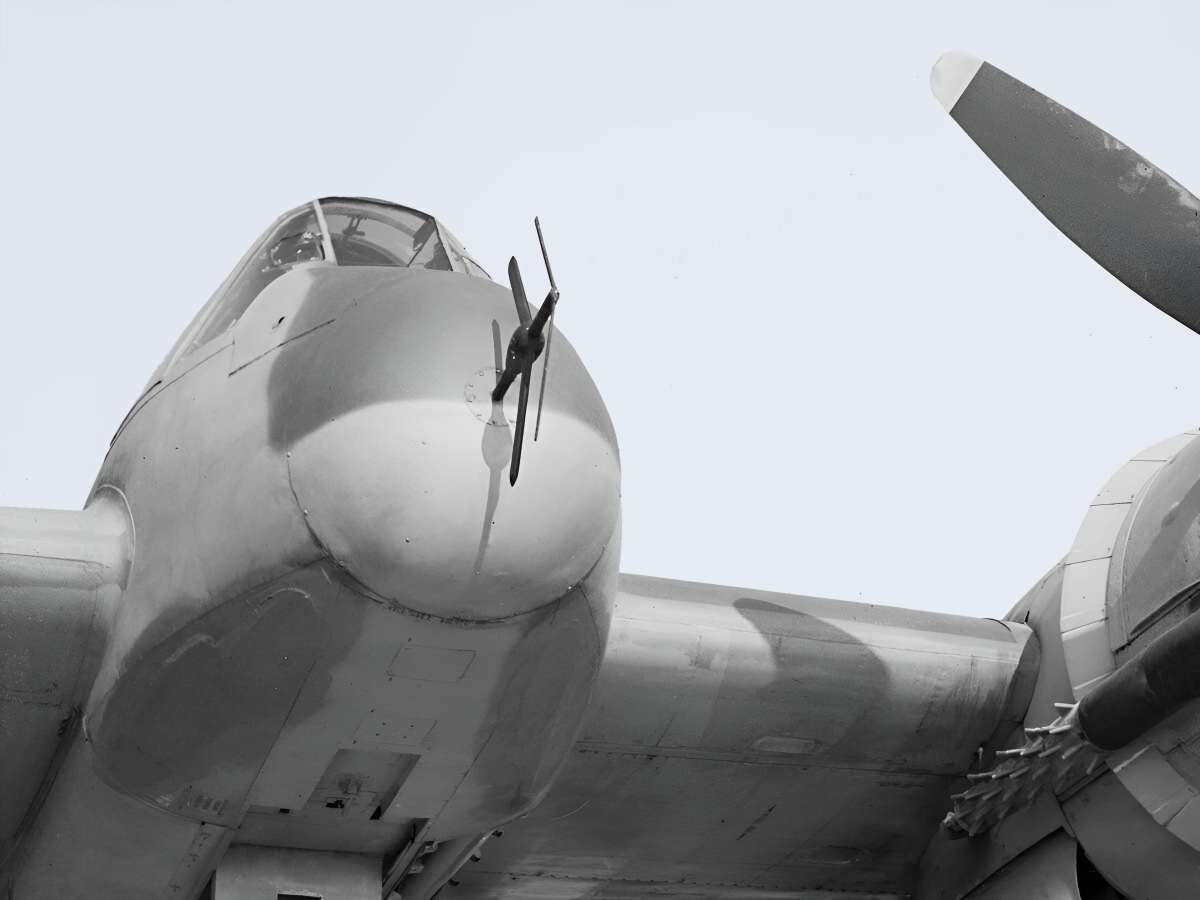
Figure 1: Sendeantenne des AI Mark IV

UNITED KINGDOM
| Specifications | |
|---|---|
| frequency: | 193 MHz
(VHF band) |
| pulse repetition time (PRT): | |
| pulse repetition frequency (PRF): | 750 Hz |
| pulsewidth (τ): | 1.3 µs |
| receiving time: | |
| dead time: | |
| peak power: | 10 kW |
| average power: | 10 W |
| instrumented range: | 3 NM (≙ 5,5 km) |
| range resolution: | |
| accuracy: | ± 10% |
| beamwidth: | |
| hits per scan: | |
| antenna rotation: | |
| MTBCF: | |
| MTTR: | |
AI Mark IV
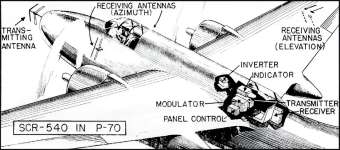
The AI Mark IV was an airborne radar for aircraft interception operating in the VHF band (IEEE designation) or in the A band (NATO designation) for target search and target engagement. It was the world's first operational air-to-air radar system. The American copy was called SCR-540 and was manufactured by Western Electric Inc.
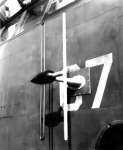
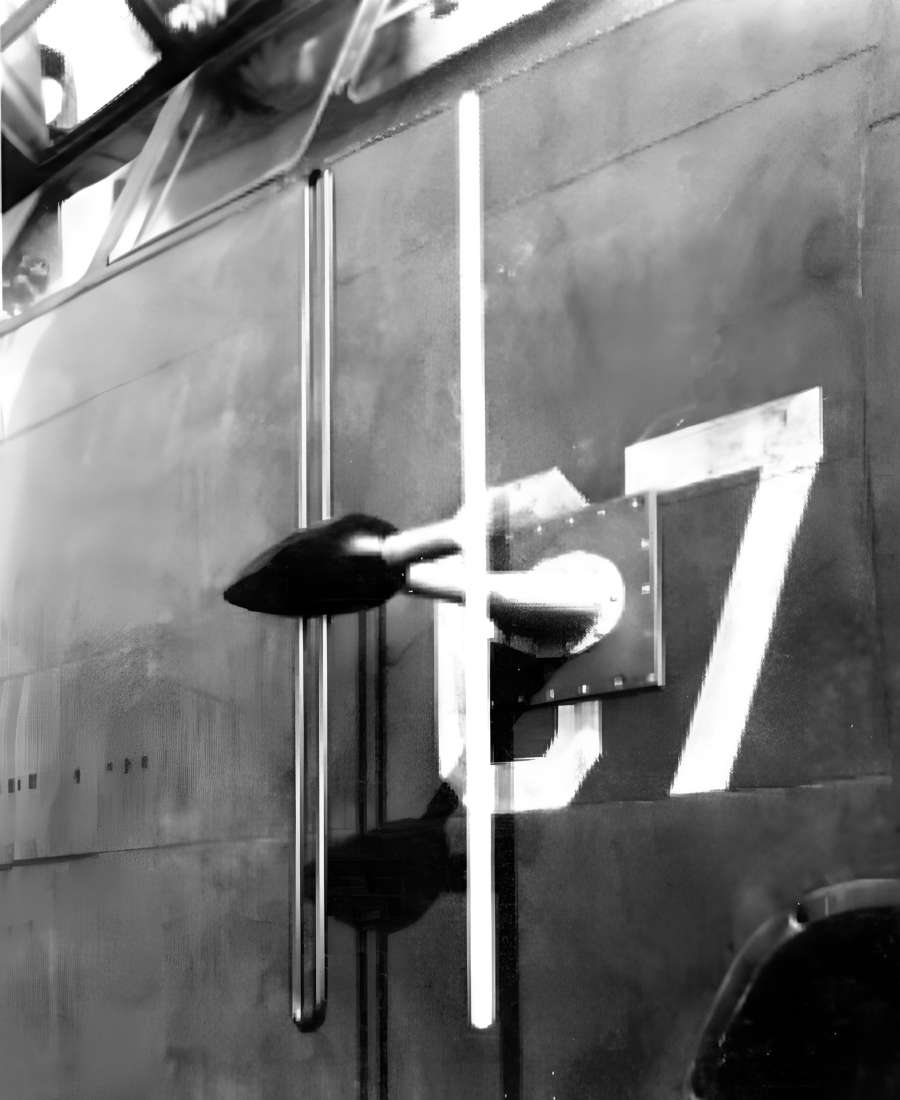
The transmitting antenna was a short Yagi antenna at the bow, with a director, a folded dipole as feed, and the metal aircraft skin as reflector. There were a total of four receiving antennas (see Figure 2). Two receiving antennas, located on the left and right sides of the fuselage, consisted of a folded dipole with a director and were used for azimuth direction finding and ranging. Two receiving antennas above and below the right wing were quarter-wave dipoles with a reflector rod. The display was on two L-scopes with 3-inch cathode ray tube each.
The radar was developed around 1940, at about the same time as the ASV Mk. Ⅰ, and was only in use for a short time until radar devices with much higher frequencies, such as the H2S, were ready for deployment.