ASV
Description of the radar set, tactical-technical characteristics

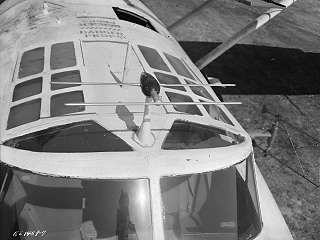
Figure 1: Transmitting antenna of the ASV Mk. Ⅱ

UNITED KINGDOM
| Specifications | |
|---|---|
| frequency: | 176 MHz
(VHF band) |
| pulse repetition time (PRT): | |
| pulse repetition frequency (PRF): | 400 Hz |
| pulsewidth (τ): | 2.6 µs |
| receiving time: | |
| dead time: | |
| peak power: | 7 kW |
| average power: | |
| instrumented range: | 40 mi (≙ 64 km) |
| range resolution: | |
| accuracy: | ± 10% |
| beamwidth: | 150° |
| hits per scan: | |
| antenna rotation: | |
| MTBCF: | |
| MTTR: | |
ASV
The ASV was an airborne surveillance radar for patrol bombers operating in the VHF band (IEEE designation) or A band (NATO designation), which was similar in design to the Type 286 ship radar. The radar was developed in Great Britain around 1940 as the ASVC. In the US Army, this radar was designated SCR-521-A and was manufactured by Western Electric Inc.
The radar used a curved folding dipole that fit onto the curvature of the aircraft's nose and used it as a reflector. Two receiving antennas were mounted under the wings. These antennas reduced the maximum speed of the aircraft by 5 to 7 knots, and the transmitting antenna reduced the swivel range of the nose guns. A modernization in 1943 was called ASV Mk. II or ASE, or SCR-521-B in the US, and used a straight half-wave dipole with a reflector as the transmitting antenna, which was mounted above the nose of the aircraft. Later US versions used a complete Yagi antenna with several directors, which narrowed the antenna pattern to 40°. Due to the better antenna gain, this version also had a greater range of up to 60 miles (≙ 97 km) for a distinctive coastline.
The British versions ASVC and ASE were installed in B-17, B-24, PBYS, PBYSA, and PBN aircraft, while the US versions SCR-521 were installed in B-17, B-24, B-25, and B-34 aircraft.
Combined with Norden's bomb release system, the radar was also used as a targeting aid for low-altitude bombing. The display was shown on an enlarged B-scope. The range was limited to 10 miles. In this combination, the system was designated AN/APQ-5.