
Mars-Passat
Description of the radar set, tactical-technical characteristics

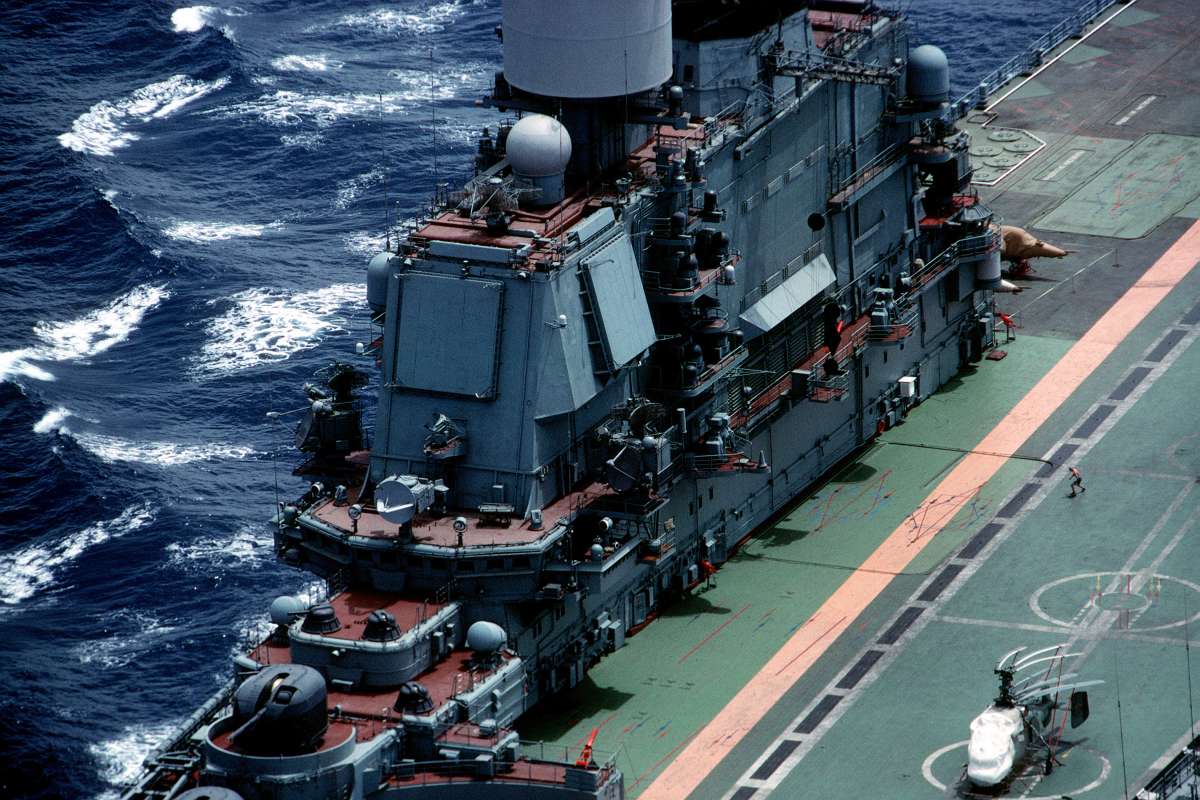
Figure 1: Mars-Passat auf dem Flugdeck-Schiff „Baku“

| Specifications | |
|---|---|
| frequency: | S band |
| pulse repetition time (PRT): | |
| pulse repetition frequency (PRF): | |
| pulsewidth (τ): | |
| receiving time: | |
| dead time: | |
| peak power: | |
| average power: | |
| instrumented range: | 145 NM (≙ 270 km) |
| range resolution: | |
| accuracy: | |
| beamwidth: | |
| hits per scan: | |
| antenna rotation: | |
| MTBCF: | |
| MTTR: | |
Mars-Passat
The Mars-Passat (Cyrillic: «Марс-Пассат», NATO designation: “Sky Watch”) was a naval air surveillance radar operating in the S band (IEEE designation) or in the F band (NATO designation) Developed primarily by the Kyiv-based Kvant Design Bureau (Ukrainian: НДІ “Квант” / today Kvant-Radiolokatsiya) in the early 1970s and 1980s, the radar used four planar phased-array antennas. A prototype was installed in 1987 on the aircraft carrier “Baku” (later renamed “Admiral Kuznetsov”). The breakup of the USSR and the resulting separation between the now-independent Ukraine and the Russian shipyards and the Russian Navy meant that the prototype’s software and hardware flaws could never be resolved, and the project was ultimately abandoned. The projected range of 170 km for targets with an effective radar cross-section of 1 m² was never achieved.