
AN/ASG-14
Description of the radar set, tactical-technical characteristics
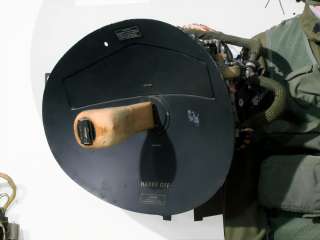
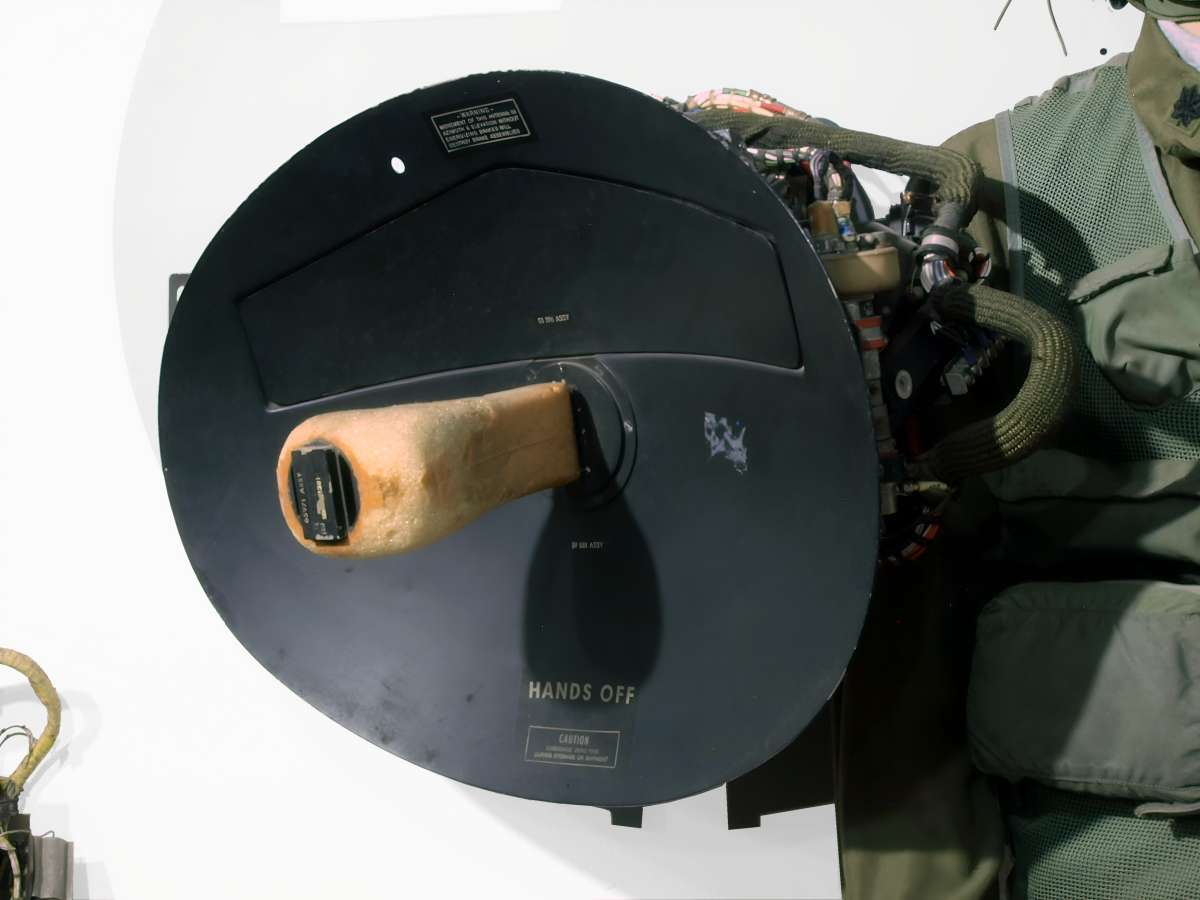
Figure 1: AN/ASG-14

| Specifications | |
|---|---|
| frequency: | 9 000 … 9 600 MHz
(X band) |
| pulse repetition time (PRT): | |
| pulse repetition frequency (PRF): | 1 kHz |
| pulsewidth (τ): | 1 or 0.5 µs |
| receiving time: | |
| dead time: | |
| peak power: | 140 kW |
| average power: | |
| instrumented range: | 20 mi (≙ 32 km) |
| range resolution: | |
| accuracy: | |
| beamwidth: | 3,9° |
| hits per scan: | |
| antenna rotation: | |
| MTBCF: | |
| MTTR: | |
AN/ASG-14
The AN/ASG-14 was a fire-control radar for the Lockheed F-104 Starfighter aircraft, built between 1956 and 1957, operating in the X band (IEEE designation) or in the I band (NATO designation). The radar provided range data to the optical sight for the M61 20mm cannon and supported target acquisition for the AIM-9 Sidewinder missiles.
It was a simple search radar with spiral scanning and limited tracking capability. The transmitter used a tunable magnetron. The radar could detect targets up to 20 miles away. When tracking targets with the shorter transmission pulse of 0.5 µs, the range was limited to about 10 miles (≙ 16 km), and a conical scan of 550 revolutions per minute was used. The radar displayed only the distance and a bearing deviation. The bearing correction had to be made using the aircraft's course.
The radar was developed by Radio Corporation of America (RCA) and later produced by Texas Instruments, then by General Electric.