AN/APS-27
Description of the radar set, tactical-technical characteristics
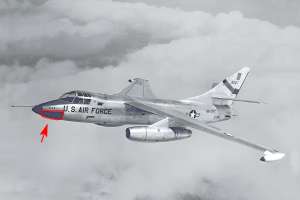
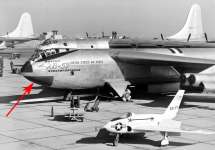
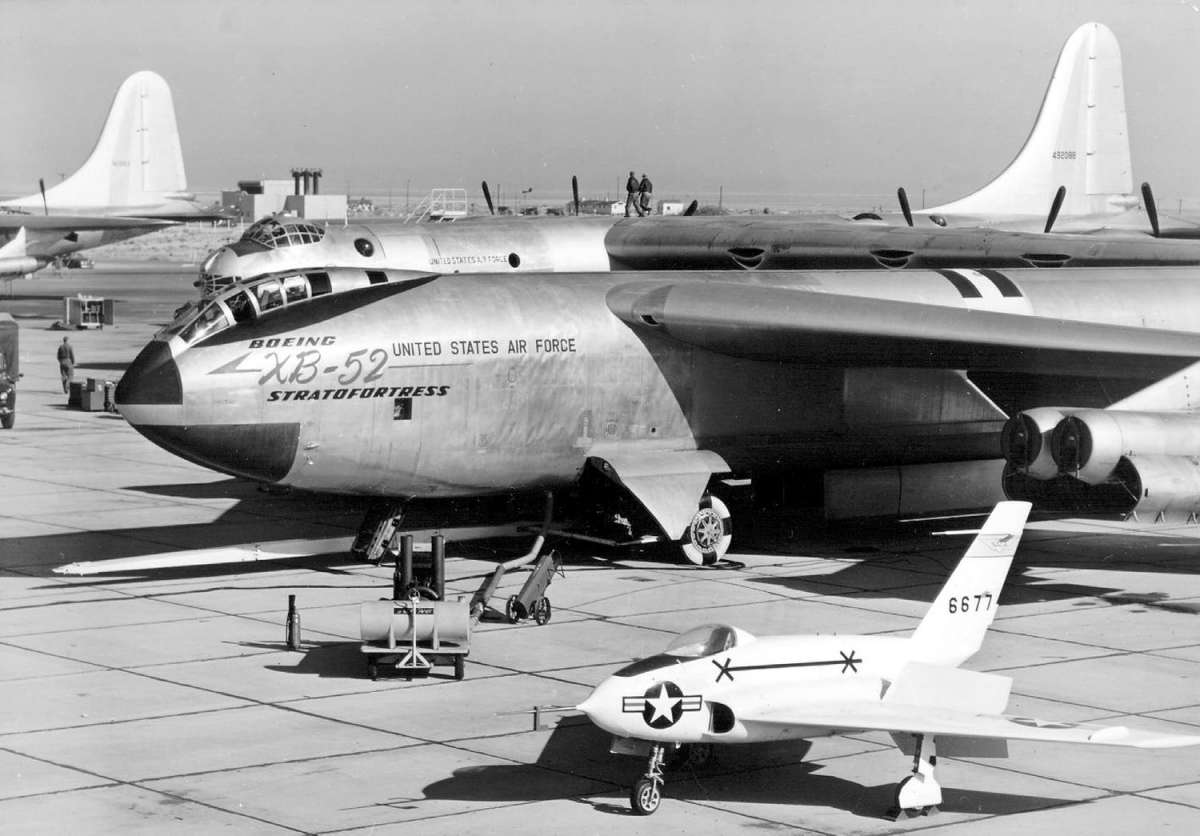
Figure 1: Douglas RB-66 fitted with AN/APS-27
| Specifications | |
|---|---|
| frequency: | 9 310 … 9 330 MHz
(X band) |
| pulse repetition time (PRT): | |
| pulse repetition frequency (PRF): | 775, 195, 2k or 300 Hz |
| pulsewidth (τ): | 0.7 … 1.2 µs |
| receiving time: | |
| dead time: | |
| peak power: | 100 kW |
| average power: | |
| instrumented range: | 170 NM (≙ 320 km) |
| range resolution: | |
| accuracy: | |
| beamwidth: | |
| hits per scan: | |
| antenna rotation: | |
| MTBCF: | |
| MTTR: | |
AN/APS-27
AN/APS-27 “Firefly” is operating in the X band (IEEE designation) or in the I band (NATO designation) air-to-surface radar, designed end of 1950s for Boeing B-52 Stratofortress, Douglas RB-66 Destroyer, Lockheed C-130 Hercules, and Boeing C-135 Stratolifter.
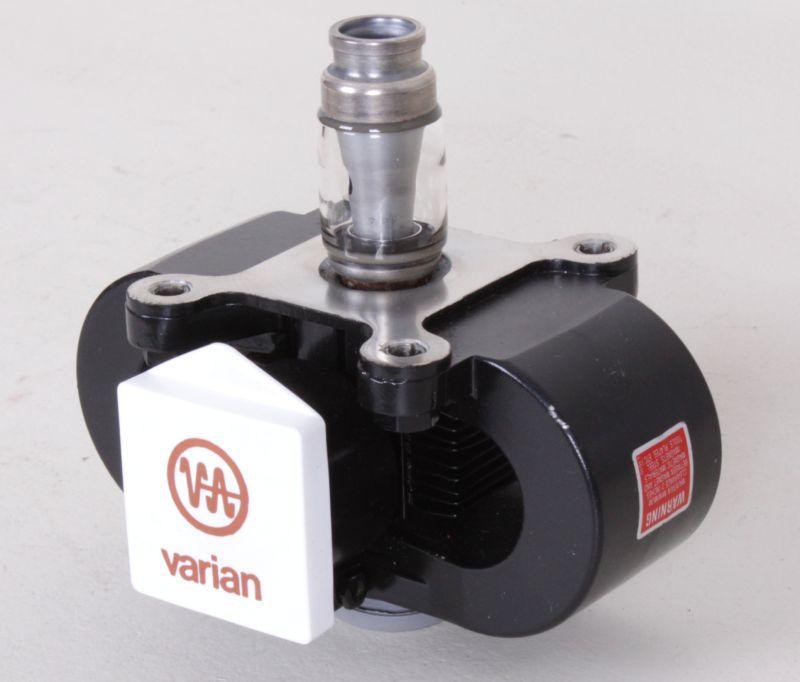
The radar was a coherent-on-receive radar with a moving target detector. It utilizes a mercury delay-line cancellation unit or a storage tube cancellation unit to eliminate ground clutter and to present only the moving vehicle echoes upon the PPI scope. The transmitter consisted of a magnetron of type 4J52, in the modulator, the hydrogen-filled thyratron of type 5C22 was used.