
SCR-615
Description of the radar set, tactical-technical characteristics
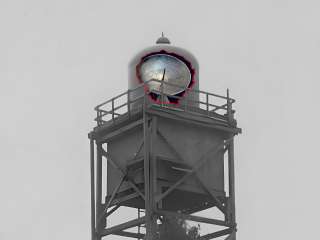
Figure 1: SCR-615

| Specifications | |
|---|---|
| frequency: | 2 800 MHz
(S band) |
| pulse repetition time (PRT): | |
| pulse repetition frequency (PRF): | 775 … 825 Hz |
| pulsewidth (τ): | 1 µs |
| receiving time: | |
| dead time: | |
| peak power: | 600 kW |
| average power: | |
| instrumented range: | 65 mi (≙ 105 km) |
| range resolution: | 180 m |
| accuracy: | |
| beamwidth: | 3° |
| hits per scan: | |
| antenna rotation: | |
| MTBCF: | |
| MTTR: | |
SCR-615
The SCR-615 was a ground-controlled intercept radar (GCI-radar) operating in the S band (IEEE designation) or in the E band (NATO designation) that could measure distance, azimuth, and elevation.
The echo signals were displayed on two A-Scopes and one PPI scope. However, its symmetrical antenna radiation pattern, which was narrow both horizontally and vertically, made it unsuitable for target search in the airspace. In many cases, it was used alongside other GCI-radars to target only low-flying targets at a tilt angle of 1°.
In the post-war period, the radar was also used as an experimental precipitation radar, despite its poor angular resolution for this application.