
5N56 „Shpaga“
Description of the radar set, tactical-technical characteristics
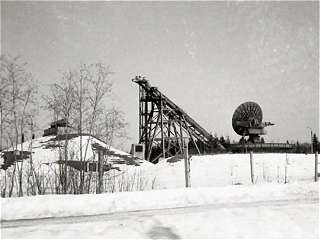
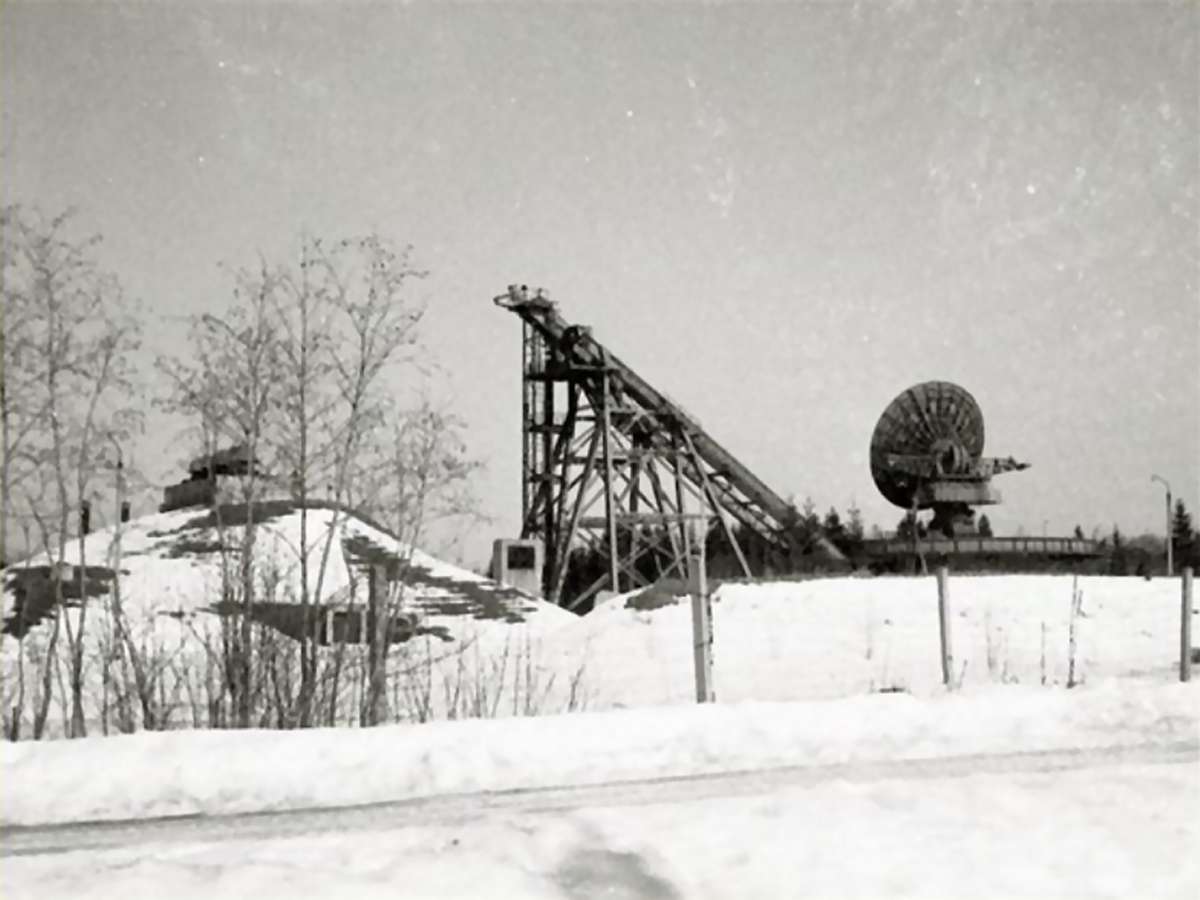
Figure 1: 5N56 „Shpaga“
| Specifications | |
|---|---|
| frequency: | S band |
| pulse repetition time (PRT): | |
| pulse repetition frequency (PRF): | |
| pulsewidth (τ): | |
| receiving time: | |
| dead time: | |
| peak power: | |
| average power: | |
| instrumented range: | 819 km |
| range resolution: | |
| accuracy: | 100 m |
| beamwidth: | 0,5° |
| hits per scan: | |
| antenna rotation: | |
| MTBCF: | |
| MTTR: | |
5N56 „Shpaga“
The 5N56 “Shpaga” (Cyrillic: 5Н56 “Шпага”, “sword”) is a stationary, fully coherent, long-range surveillance and target acquisition radar operating in S band (IEEE designation) or E/F band (NATO designation) for the SA-5 “Gammon” anti-aircraft missile complex.
The radar uses intrapulse modulation and therefore had above-average jamming immunity for that time. The antenna consists of a parabolic reflector with a diameter of 12 meters. A group of radiators enables sector surveillance even when the antenna stands still.
The radar was developed between 1961 and 1974. Signal processing was carried out digitally by a computer with 1 kByte RAM (ferrite core memory) and 8 kByte ROM.