
AN/APQ-51
Description of the radar set, tactical-technical characteristics
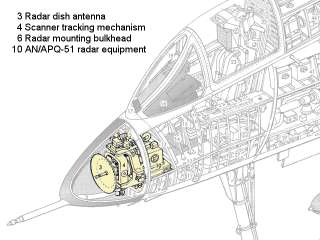
Figure 1: AN/APQ-51 in Vought F7U Cutlass

Sperry Corporation (1910-1986)
| Specifications | |
|---|---|
| frequency: | 9 690 … 9 780 MHz
(X band) |
| pulse repetition time (PRT): | |
| pulse repetition frequency (PRF): | 1200 or 200 Hz |
| pulsewidth (τ): | 0.42 or 0.66 µs |
| receiving time: | |
| dead time: | |
| peak power: | 250 kW |
| average power: | |
| instrumented range: | 6 NM (≙ 11 km) |
| range resolution: | |
| accuracy: | |
| beamwidth: | 4° |
| hits per scan: | |
| antenna rotation: | |
| MTBCF: | |
| MTTR: | |
AN/APQ-51
AN/APQ-51 was operating in the X band (IEEE designation) or in the I band (NATO designation) missile control radar for the guidance of the Sparrow I air-to-air guided missile. The AN/APQ-51 was with all-weather operational capability, but the performance level was very low, making it difficult to intercept medium-range, high-altitude aircrafts carrying electronic countermeasures equipment.
The radar was produced between 1955 and 1957. The basic version APQ-51 still uses a fixed-frequency magnetron. A modernization to the APQ-51B already offered a tunable magnetron. A usable jamming immunity was not available until the APQ-51C version.