S-Pol
Description of the radar set, tactical-technical characteristics

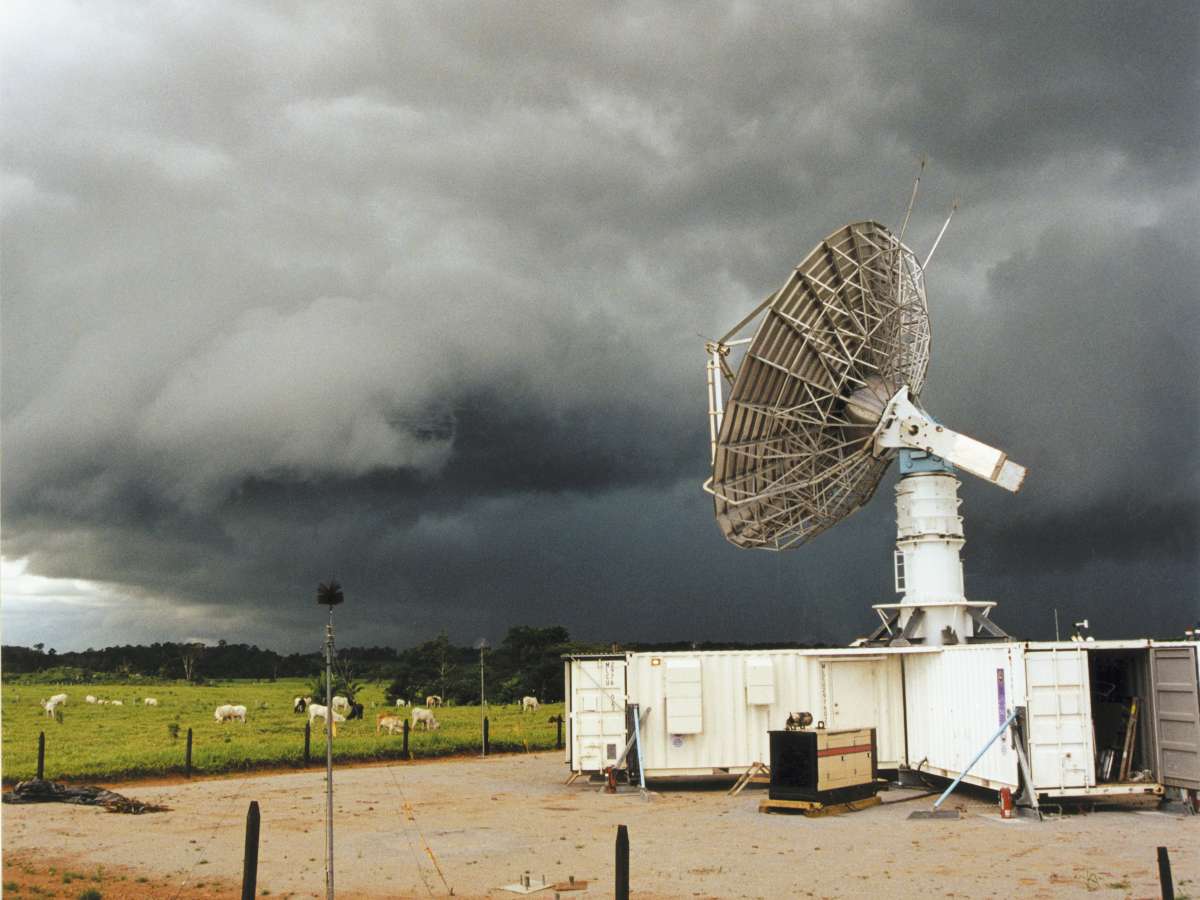
Figure 1: S-Pol Radar during Tropical Rainfall Measuring Mission (TRMM), Photo by Scott Ellis
(Source: NCAR/UCAR Image and Multimedia Gallery )
Figure 1: S-Pol Radar during Tropical Rainfall Measuring Mission (TRMM), Photo by Scott Ellis
(Source: NCAR/UCAR Image and Multimedia Gallery )
| Specifications | |
|---|---|
| frequency: | 2.7 … 2.9 GHz
(S band) |
| pulse repetition time (PRT): | |
| pulse repetition frequency (PRF): | 325 … 1 200 Hz |
| pulsewidth (τ): | 0.3 … 1.4 µs |
| receiving time: | |
| dead time: | |
| peak power: | > 1 MW |
| average power: | |
| instrumented range: | |
| range resolution: | 37.5 … 1 000 m |
| accuracy: | |
| beamwidth: | 0.92° |
| hits per scan: | |
| antenna rotation: | |
| MTBCF: | |
| MTTR: | |
S-Pol
The S-Pol is a dual polarized weather radar operating in the S band, built in 1995 for research purposes.
It uses a centrally fed parabolic antenna with 8.5 m diameter. The transmitter was developed from the ASR-9 and uses an air-cooled klystron that provides about 1 MW of pulse power at a pulse duration of 1 µs. The radar is equipped with two receivers operating simultaneously for horizontal and vertical polarization, but can only transmit mechanically switchable in one of the two polarization directions. The receivers have a sensitivity of -115 dBm with a receiver dynamic range of 90 dB.
In a later upgrade, an additional radar operating in Ka band was mounted at the lower edge of the parabolic antenna. This resulted in the name S-Polka.