
AN/TPX-17
Description of the radar set, tactical-technical characteristics
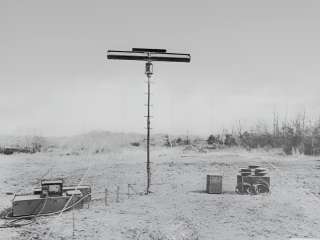
Figure 1: AN/GPA-8
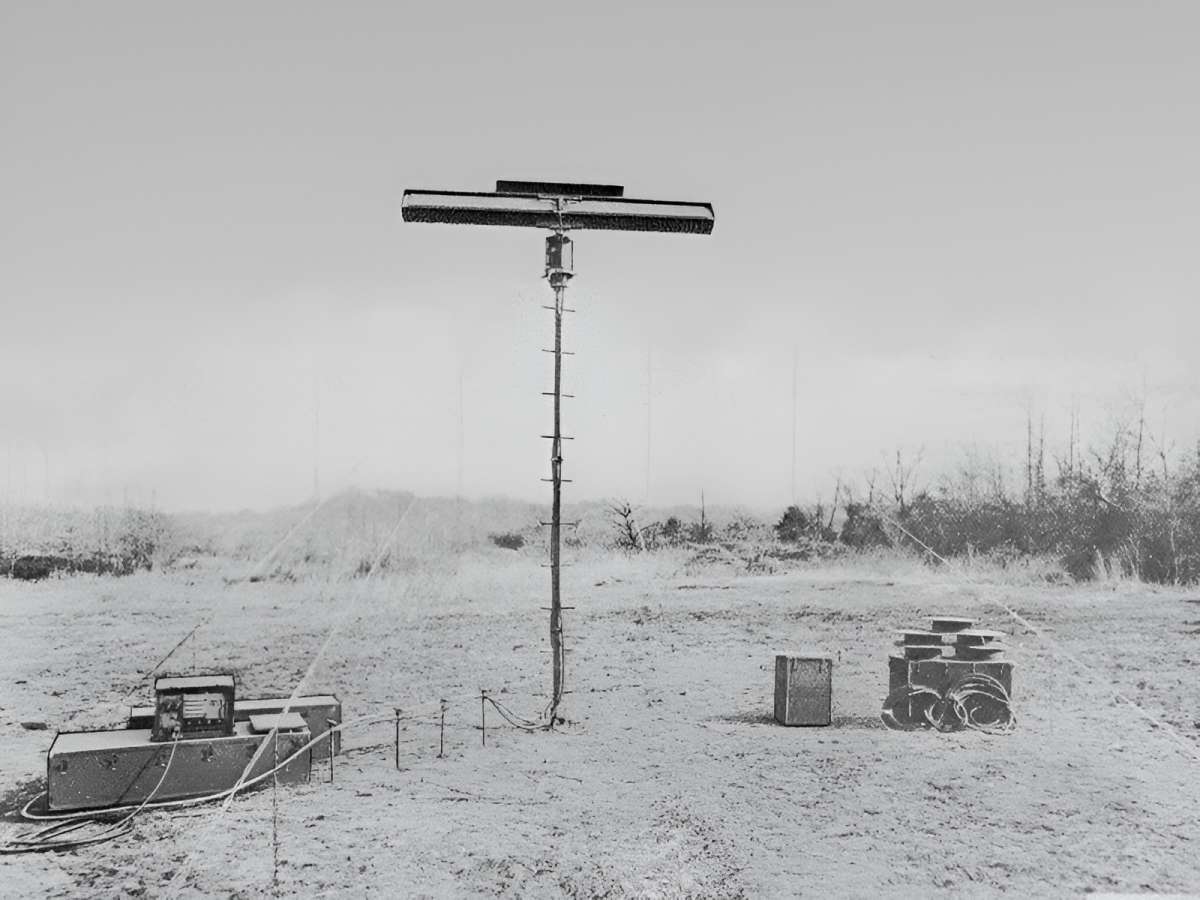
Maryland Electronic Manufacturing Corp.
| Specifications | |
|---|---|
| frequency: | 1 010 and 1 110 MHz
(L band) |
| pulse repetition time (PRT): | |
| pulse repetition frequency (PRF): | |
| pulsewidth (τ): | |
| receiving time: | |
| dead time: | |
| peak power: | 10 kW |
| average power: | |
| instrumented range: | |
| range resolution: | |
| accuracy: | |
| beamwidth: | |
| hits per scan: | |
| antenna rotation: | |
| MTBCF: | |
| MTTR: | |
AN/TPX-17
AN/TPX-17 was a secondary radar operating in the L band (IEEE designation) or in the D band (NATO designation)for interrogating friend or foe identification.
The AN/GPA-8 was the designation for its separate transmitter/receiver group with the antenna. The broadside antenna array rotated synchronously with a primary radar antenna and consisted of a group of 12 slot radiators.
The AN/TPX-17A used the reflector of the primary radar antenna. The AN/TPX-17B was partially transistorized for improved reliability. The AN/TPX-17C was equipped with a new coder/decoder for the IFF Mark X.
Source:
- Military Standardization Handbook, United States Radar Equipment Manual TM 11-487C-1 1965, p. 207f