SCR-695
Description of the radar set, tactical-technical characteristics
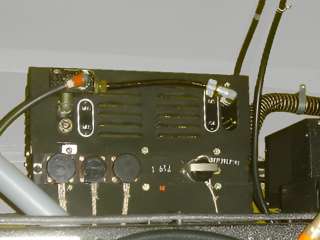
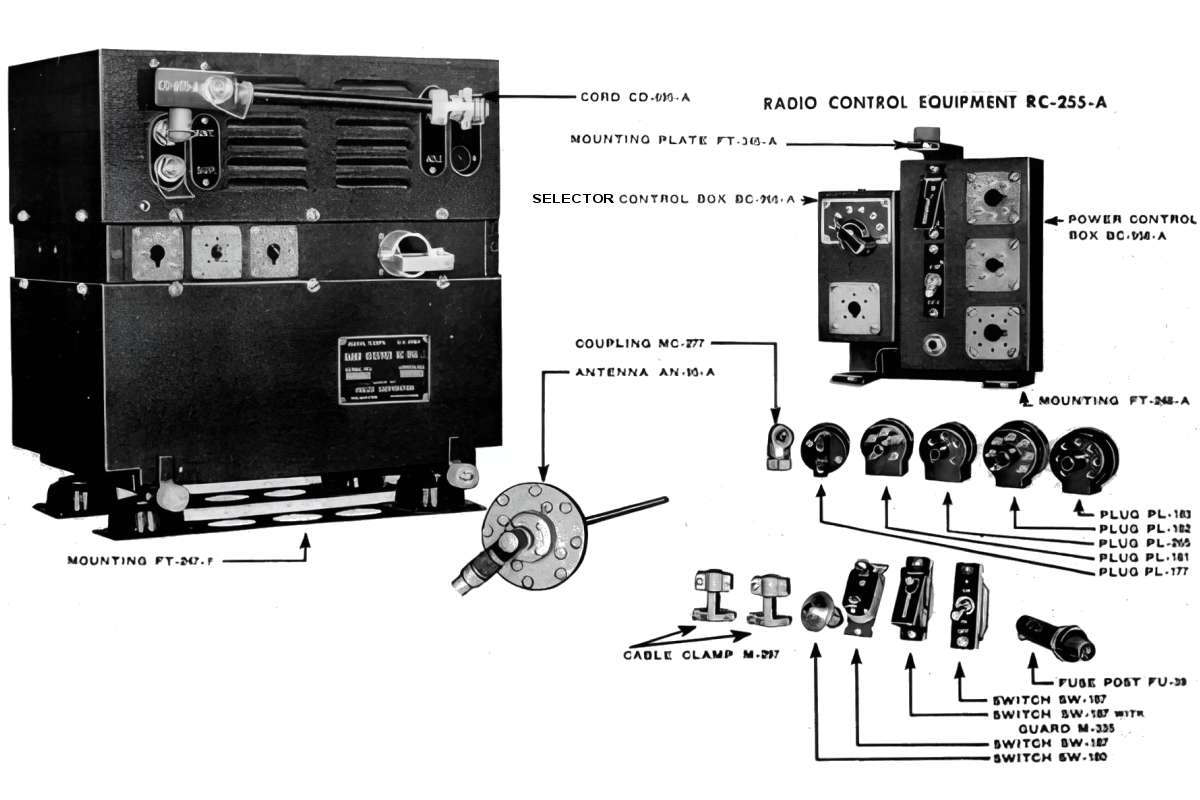
Figure 1: AN/APX-04

| Specifications | |
|---|---|
| frequency: | 157 … 187 MHz
(VHF band) |
| pulse repetition time (PRT): | |
| pulse repetition frequency (PRF): | |
| pulsewidth (τ): | |
| receiving time: | |
| dead time: | |
| peak power: | 3 W |
| average power: | |
| instrumented range: | 90 NM (≙ 160 km) |
| range resolution: | |
| accuracy: | |
| beamwidth: | |
| hits per scan: | |
| antenna rotation: | |
| MTBCF: | |
| MTTR: | |
SCR-695
The SCR-695 (in the US-Navy known as ABF) was an airborne transponder that operated in the VHF band (IEEE designation) or in the A band (NATO designation) with the IFF Mark Ⅲ standard. The transponder was later designated AN/APX-04 in the US JETDS nomenclature. It was the predecessor of the AN/APX-44.
In older literature, frequency band designations that were valid at the time are often used for radar: the former military frequency band I corresponded to a frequency range of 100 to 150 MHz, while frequency band G corresponded to a frequency range of 150 to 225 MHz. There were different versions of the radar, some of which also operated at frequencies slightly below 150 MHz.