
MR-200
Description of the radar set, tactical-technical characteristics
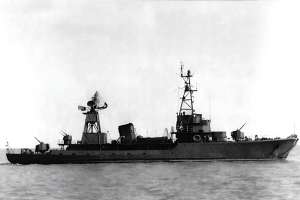
Figure 1: MR-200 auf einem Schiff des Projektes 258
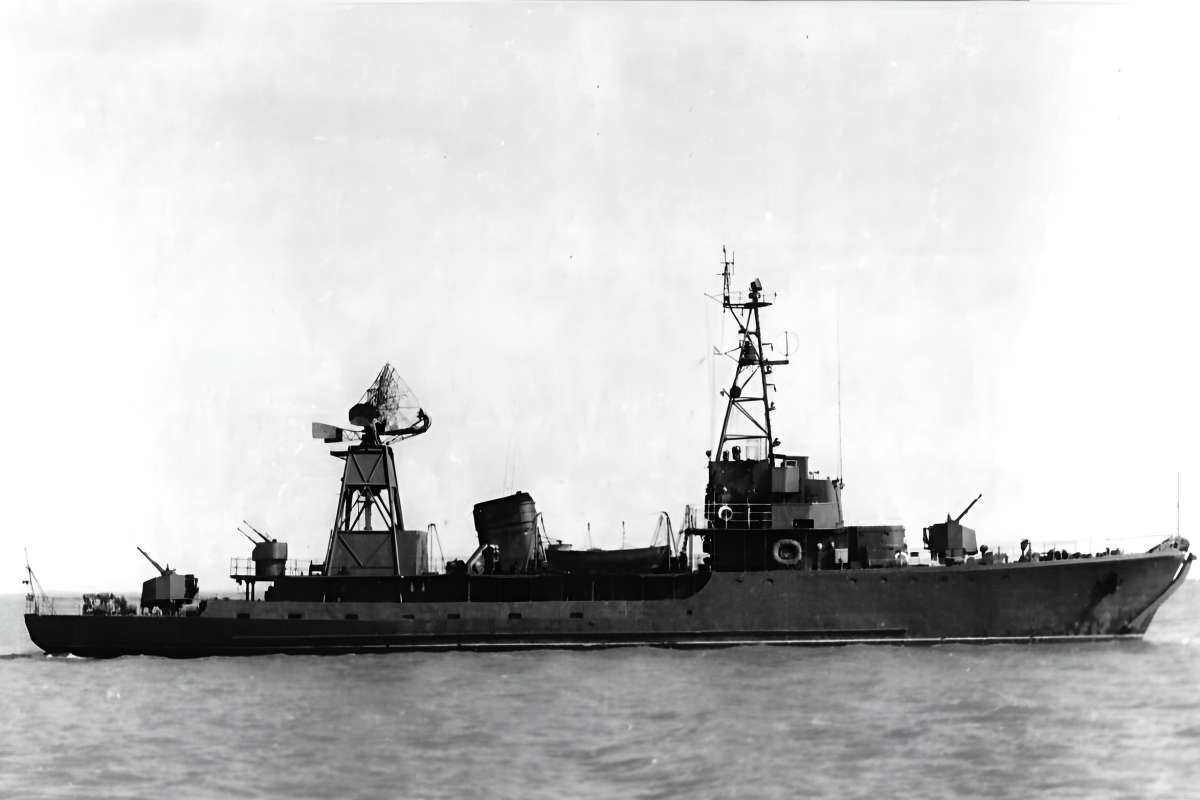

former Soviet Union
| Specifications | |
|---|---|
| frequency: | UHF band |
| pulse repetition time (PRT): | |
| pulse repetition frequency (PRF): | |
| pulsewidth (τ): | |
| receiving time: | |
| dead time: | |
| peak power: | |
| average power: | |
| instrumented range: | |
| range resolution: | |
| accuracy: | |
| beamwidth: | |
| hits per scan: | |
| antenna rotation: | |
| MTBCF: | |
| MTTR: | |
MR-200
The MR-200 “Kaktus” (Cyrillic: МР-200 «Кактус») was a ship-based air surveillance radar that operated in the UHF band (IEEE designation) or in the B/C band (NATO designation).
The antenna is almost identical to that of the MR-500 „Kliver“.
The radar was developed around 1961 and deployed in the former Soviet Union on Project 258 radar patrol ships (KVN), Project 68-bis light cruisers, and ships of the Project 1918 survey complex. By the late 1970s, it had already been replaced by more modern systems such as the MR-310 or the MR-302.