Type 82
Description of the radar set, tactical-technical characteristics
Figure 1: Type 82

| Specifications | |
|---|---|
| frequency: | 3 GHz
(S band) |
| pulse repetition time (PRT): | |
| pulse repetition frequency (PRF): | 150 Hz |
| pulsewidth (τ): | 2 µs |
| receiving time: | |
| dead time: | |
| peak power: | 1.5 MW |
| average power: | |
| instrumented range: | 150 NM (≙ 278 km) |
| range resolution: | |
| accuracy: | |
| beamwidth: | 1.5° |
| hits per scan: | |
| antenna rotation: | 8 or 12 min⁻¹ |
| MTBCF: | |
| MTTR: | |
Type 82
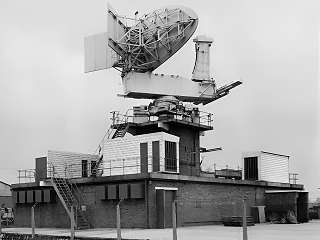
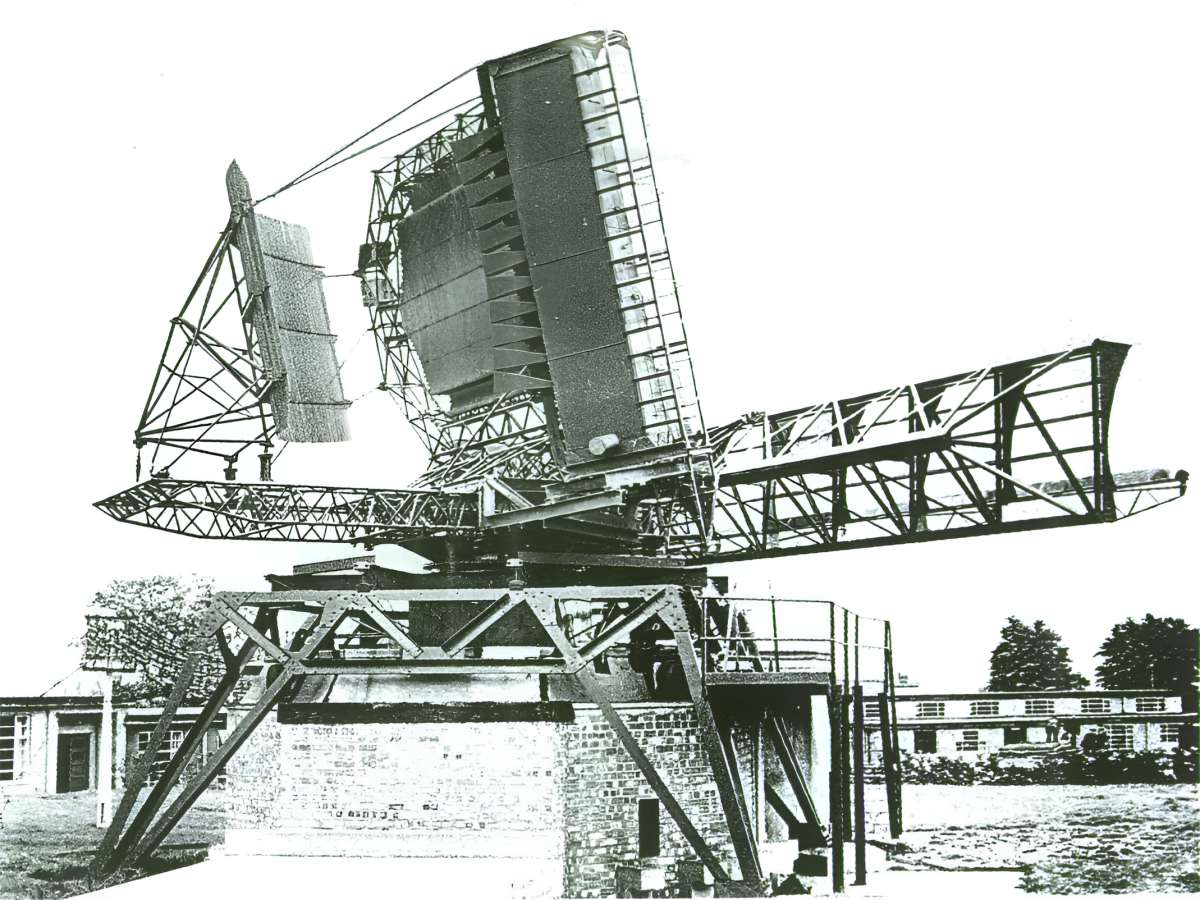
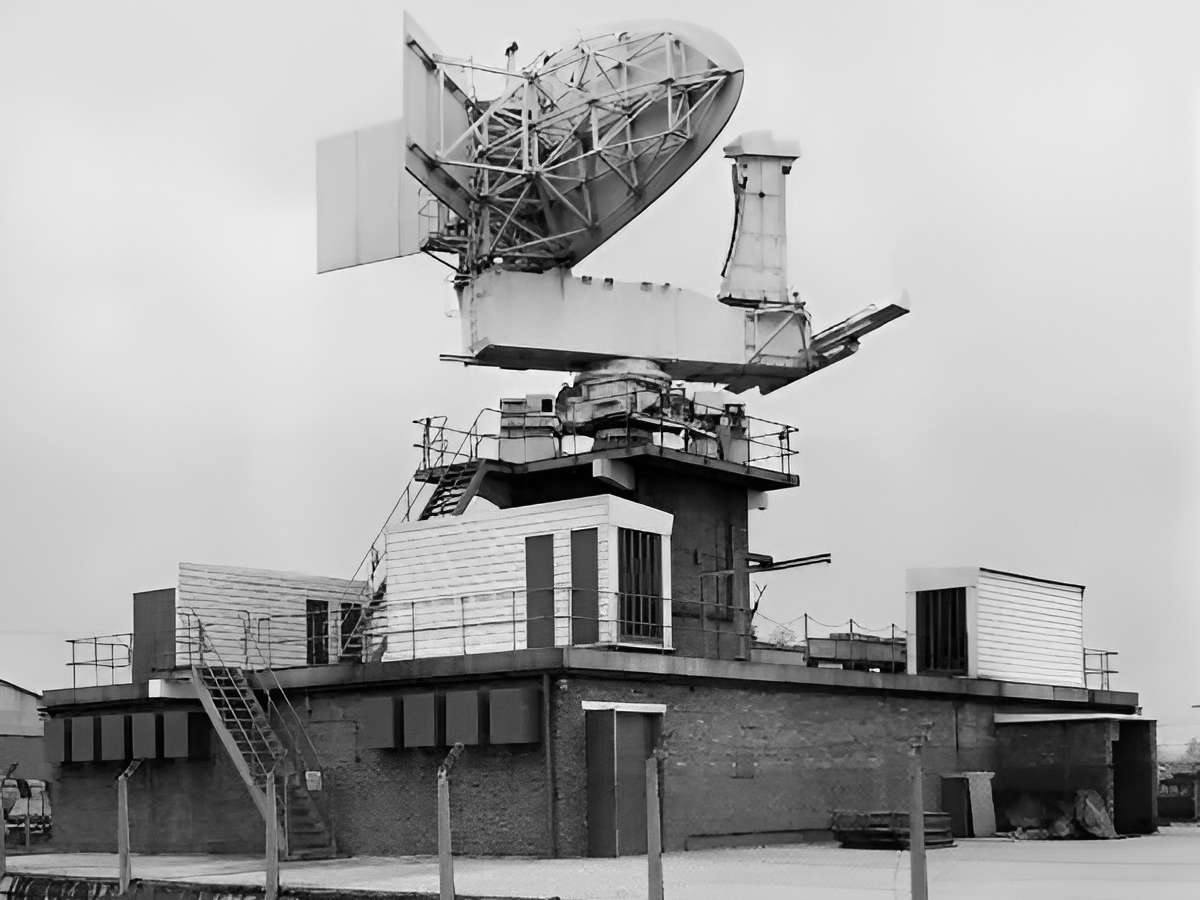
Type 82 “Orange Yeoman” was a three-dimensional radar operating in the S band (IEEE designation) or in the E/F band (NATO designation). It was used for tactical control of Bloodhound missiles, air traffic control and as airfield radar.
The system featured a complex antenna design with separate transmit and receive antennas. The transmit antenna was a slotted waveguide positioned in front of a 14-meter-wide, 1.5-meter-high single-curved parabolic reflector. It produced a fan beam pattern with a vertical width of 30°. The receiving antenna was located above the transmitting antenna and initially consisted of a combination of an RF lens and a reflector positioned behind it. It was a “stacked-beam” system with 11 vertically staggered horn radiators. In later versions, the receiving antenna was simplified and replaced by a single large parabolic reflector with two wind compensators on the back.