
SCR-658
Description of the radar set, tactical-technical characteristics
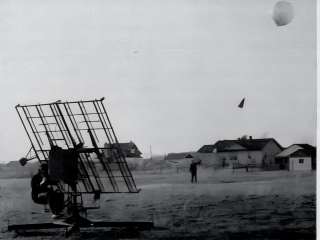
Figure 1: SCR-658

 Hersteller:
U.S. Army Signal Corps
| Specifications | |
|---|---|
| frequency: | 400 MHz
(UHF band) |
| pulse repetition time (PRT): | |
| pulse repetition frequency (PRF): | |
| pulsewidth (τ): | |
| receiving time: | |
| dead time: | |
| peak power: | |
| average power: | |
| instrumented range: | |
| range resolution: | |
| accuracy: | |
| beamwidth: | |
| hits per scan: | |
| antenna rotation: | |
| MTBCF: | |
| MTTR: | |
SCR-658
The SCR-658 was a radio direction finder for weather balloons operating in the UHF band (IEEE designation) or in the B band (NATO designation), which was put into service by the US Army in 1944. It is a successor to the SCR-268 and uses radar components from the SCR-268.
The SCR-658 was installed by US occupation forces at Berlin-Tempelhof Airport (TXL) in 1945. During the Berlin Airlift, Air Force meteorologists used the direction finder to track weather balloons and measure wind direction and speed, temperature, humidity, and air pressure based on the radio signals transmitted by the balloons.