
ASH-1
Description of the radar set, tactical-technical characteristics
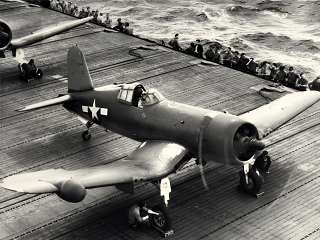
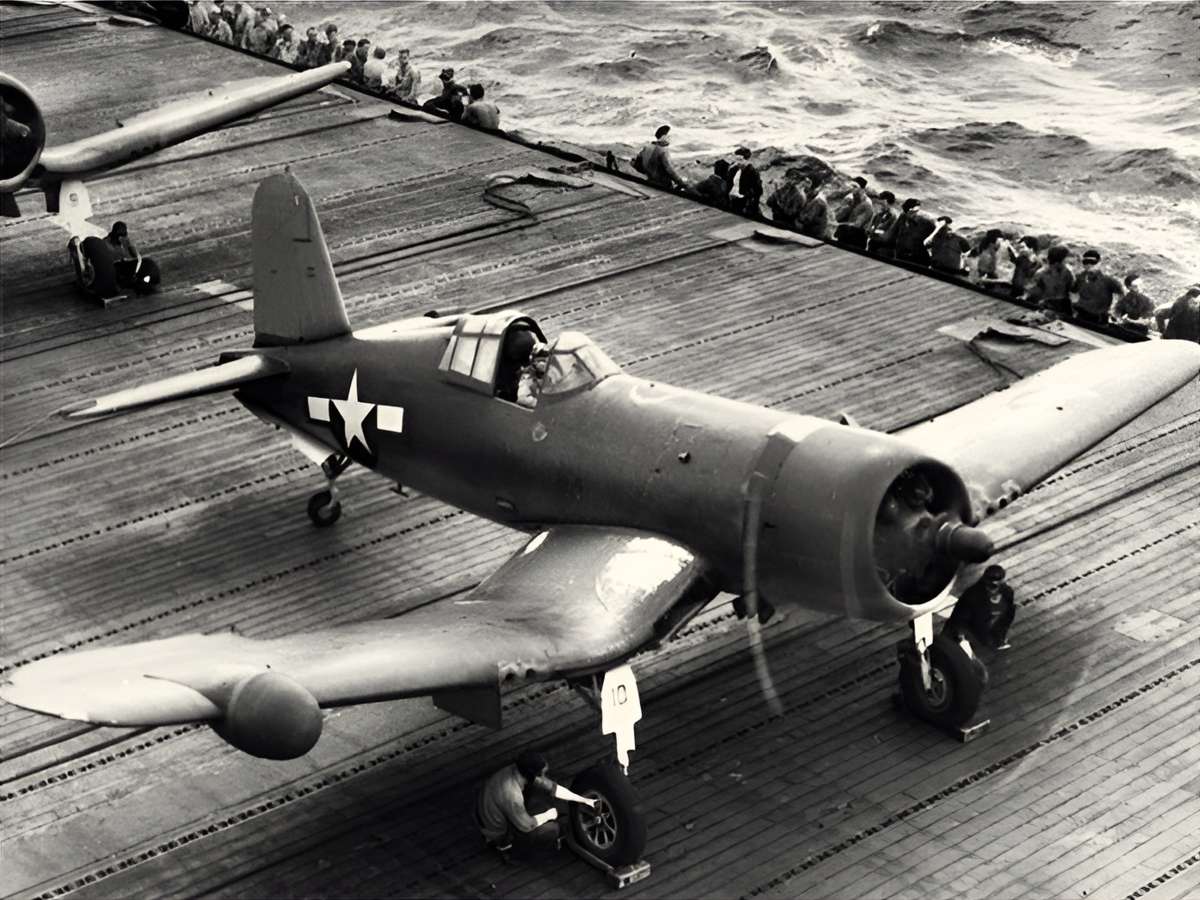
Figure 1: Vought F4U-4N Corsair with AN/APS-5 on the right wing tip


| Specifications | |
|---|---|
| frequency: | 9,3 GHz
(X band) |
| pulse repetition time (PRT): | |
| pulse repetition frequency (PRF): | 350, 600, 1000 Hz |
| pulsewidth (τ): | 2,1 or 0,6 µs |
| receiving time: | |
| dead time: | |
| peak power: | 35 kW |
| average power: | |
| instrumented range: | 130 NM (≙ 240 km) |
| range resolution: | 90 m |
| accuracy: | |
| beamwidth: | 6° |
| hits per scan: | |
| antenna rotation: | |
| MTBCF: | |
| MTTR: | |
ASH-1
The ASH-1 was an early airborne maritime surveillance radar operating in the X band (IEEE designation) or in the I band (NATO designation) used in Vought F4U-4N Corsair during WWII and the Cold War. It is an improved version of ASH and was later reassigned as AN/APS-5. The radar enabled patrol aircraft to detect surfaced submarines and ships over vast oceanic areas.
The improvements mainly concerned user-friendliness, so that the radar could also be used in aircraft with only one pilot. The radar was no longer designed as a dropable pod, but was permanently installed on the right wing tip. The diameter of the display tube was reduced to 2 inches to save space on the instrument panel.