
DECCA 101
Description of the radar set, tactical-technical characteristics
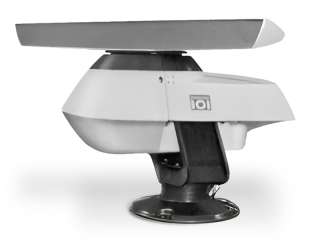
Figure 1: DECCA 101


| Specifications | |
|---|---|
| frequency: | 9 445 ± 35 MHz
(X band) |
| pulse repetition time (PRT): | |
| pulse repetition frequency (PRF): | 3 kHz |
| pulsewidth (τ): | 0.25 or 0.08 µs |
| receiving time: | |
| dead time: | |
| peak power: | |
| average power: | |
| instrumented range: | 15 NM (≙ 28 km) |
| range resolution: | |
| accuracy: | |
| beamwidth: | β= 2.5° ; ε= 30° |
| hits per scan: | |
| antenna rotation: | |
| MTBCF: | |
| MTTR: | |
DECCA 101
DECCA 101 was a low-cost maritime navigation radar operating in the X band (IEEE designation) or in the I band (NATO designation) for small vessels.
The antenna was a slotted waveguide with a length of 3½ feet and center feed. The transmitter was located in the pedestal, therefore, no long waveguides were needed. The 7-in cathode-ray tube display has ranges of ½, 1½, 5, and 15 nautical miles.
This radar was developed at the end of the 1960s. It was very popular and nearly 21,000 were sold.
DECCA Super 101
This radar is almost identical to the DECCA 101, but has an increased instrumented range of 18 nautical miles (≙ 33 km).