
AN/APS-6
Description of the radar set, tactical-technical characteristics
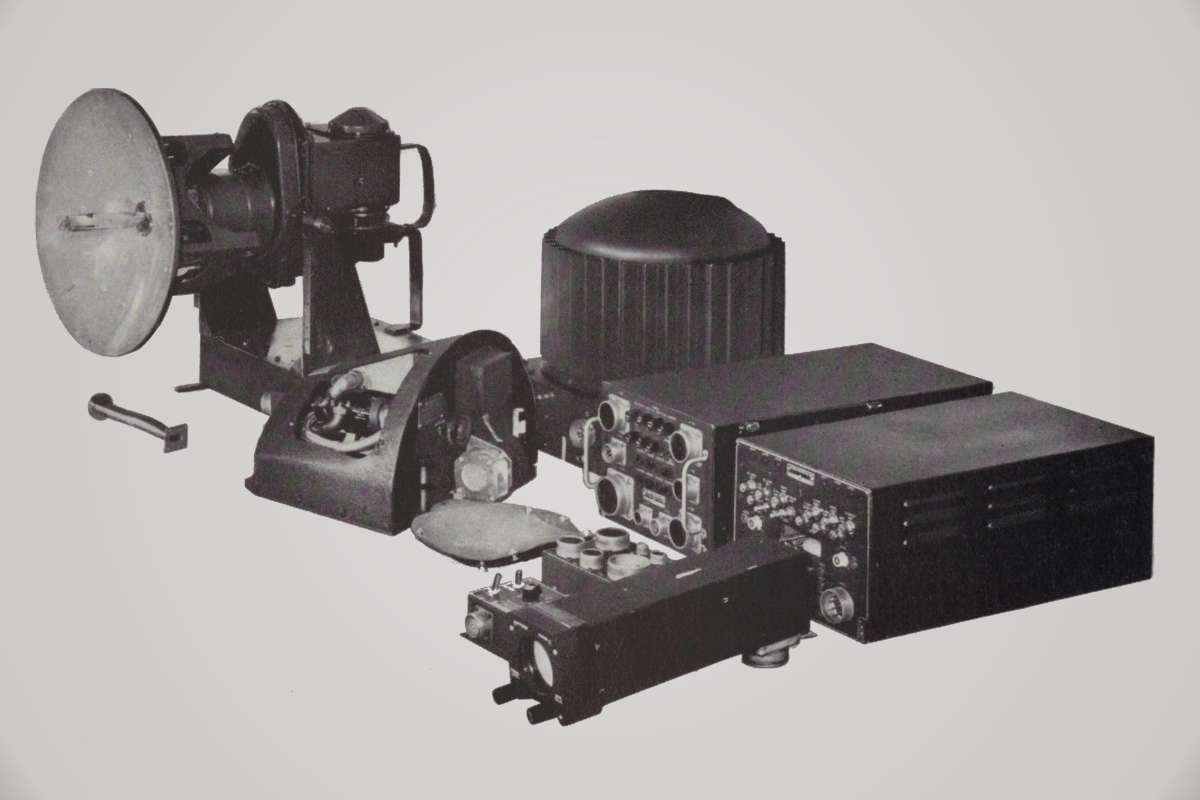
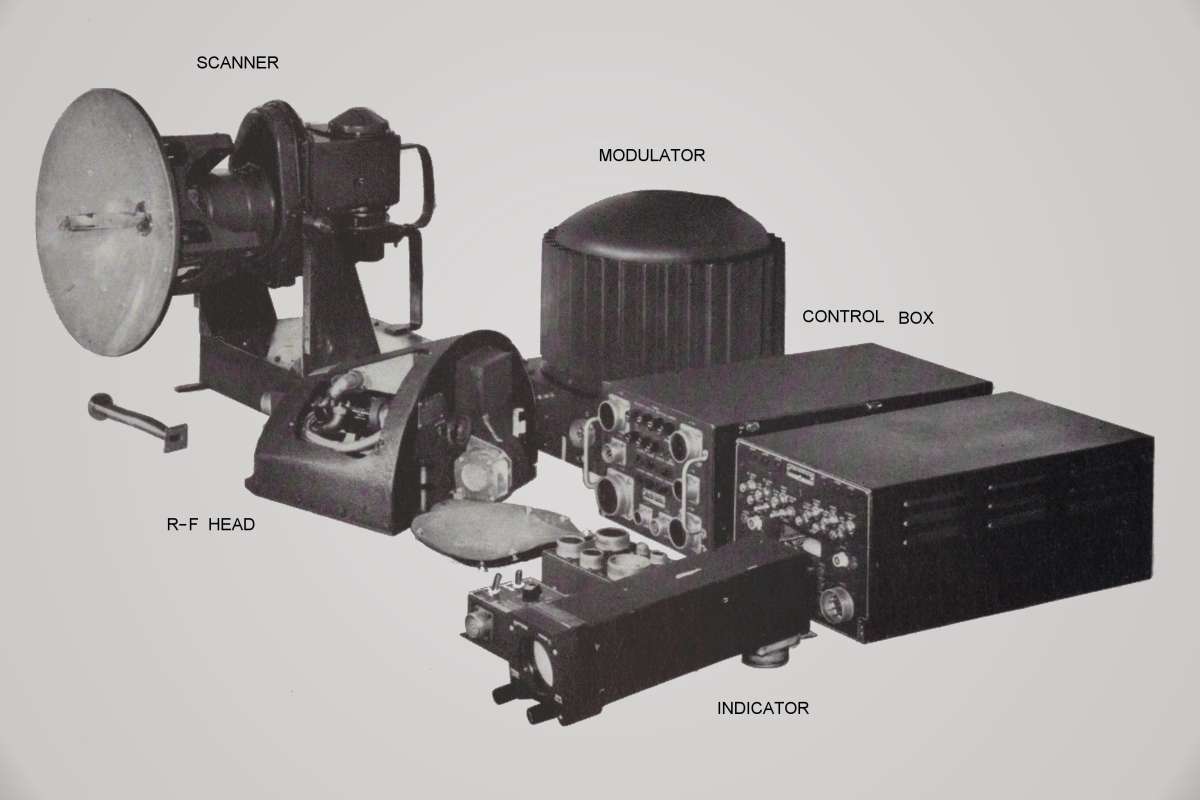
Figure 1: AN/APS-6 system components

| Specifications | |
|---|---|
| frequency: | 9 375 MHz
(X band) |
| pulse repetition time (PRT): | |
| pulse repetition frequency (PRF): | 2 000 Hz |
| pulsewidth (τ): | 0.5 µs |
| receiving time: | |
| dead time: | |
| peak power: | 40 kW |
| average power: | 40 W |
| instrumented range: | 60 NM (≙ 110 km) |
| range resolution: | |
| accuracy: | |
| beamwidth: | 5° |
| hits per scan: | |
| antenna rotation: | |
| MTBCF: | |
| MTTR: | |
AN/APS-6
AN/APS-6 is operating in the X band (IEEE designation) or in the I band (NATO designation) airborne radar designed for carrier-based night fighter planes. It was a simplification of AN/APS-4 with a slightly larger parabolic reflector (17.5").
The AN/APS-6 was developed in 1943/44. Between April 1944 and April 1945, 791 sets were produced. The radar employed a spiral target search method. Once a target was detected, it was tracked using a conical scan at 20 revolutions per second.