
KLJ-7
Description of the radar set, tactical-technical characteristics
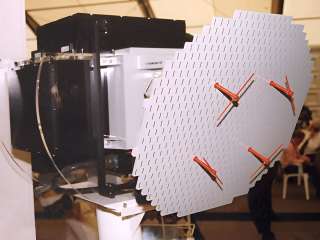
Figure 1: KLJ-7

| Specifications | |
|---|---|
| frequency: | X band |
| pulse repetition time (PRT): | |
| pulse repetition frequency (PRF): | |
| pulsewidth (τ): | |
| receiving time: | |
| dead time: | |
| peak power: | |
| average power: | |
| instrumented range: | 60 NM (≙ 111 km) |
| range resolution: | |
| accuracy: | |
| beamwidth: | |
| hits per scan: | |
| antenna rotation: | |
| MTBCF: | 220 hrs. |
| MTTR: | 30 min |
KLJ-7
The KLJ-7, also known as Type 1478, is an airborne fire-control radar operating in the X band (IEEE designation) or I band (NATO designation). It features a mechanically steered slotted waveguide array antenna.
It was developed by Nanjing Research Institute of Electronic Technology (NRIET) and has notable similarities to Alenia’s Grifo-7, of which approximately 100 units have been sold to China.
The KLJ-7 offers improved radar data processing capabilities compared to the Grifo-7. It can process up to 40 targets, track up to 10 of them in Track While Scan (TWS) mode, and simultaneously engage two beyond visual range (BVR) targets.