
Komar
Description of the radar set, tactical-technical characteristics
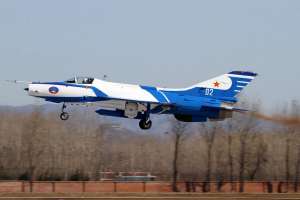
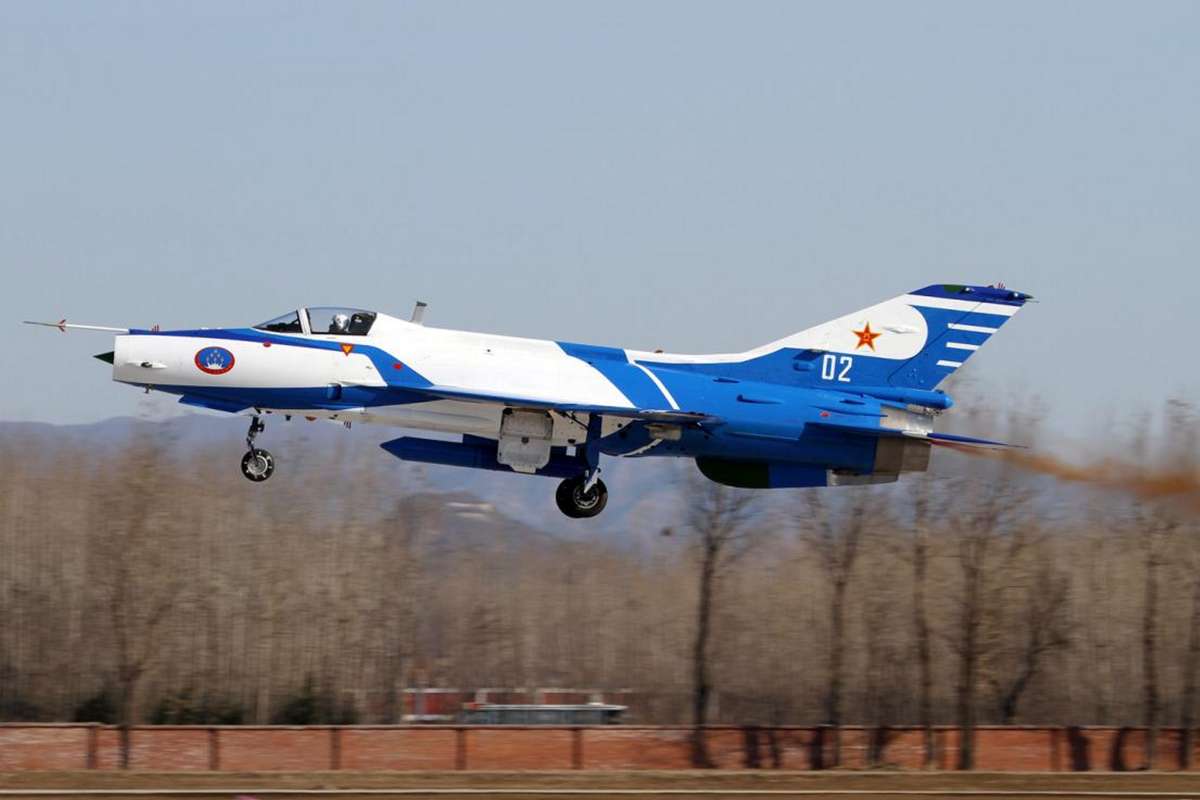
Figure 1: Super Komar on a Chinese J-7

| Specifications | |
|---|---|
| frequency: | X band |
| pulse repetition time (PRT): | |
| pulse repetition frequency (PRF): | |
| pulsewidth (τ): | |
| receiving time: | |
| dead time: | |
| peak power: | 4 kW |
| average power: | 0.3 kW |
| instrumented range: | 32 NM (≙ 60 km) |
| range resolution: | |
| accuracy: | |
| beamwidth: | |
| hits per scan: | |
| antenna rotation: | |
| MTBCF: | |
| MTTR: | |
Komar
The Komar (Cyrillic: «Комар», “Gnat” - also translated as “Mosquito” in some literature) is an operating in X band multi-role radar system mounted in a pod, designed to upgrade older Chinese and Russian combat aircraft. Its air-to-air capabilities include boresight tracking, a head-up display, multiple target tracking, and vertical maneuvering. For air-to-ground operations, it features Doppler beam sharpening, real-beam mapping, and synthetic aperture radar.
This system is a lighter version of the Kopyo-25 and offers the option to configure the pod for rear hemisphere scanning. Newer electronics and air cooling instead of liquid cooling have drastically reduced the weight from 125 kg to 80 kg.
The radar consists of five line-replaceable units: a flat, slotted array antenna; a traveling wave tube transmitter; a combined receiver/exciter; a signal processor; and a data processor.
Super Komar
The Super Komar equipment features a new digital signal and data processor. It offers enhanced capabilities compared to the Komar. While the Komar and its predecessor Kopyo can simultaneously track 8 targets and engage 2 of them, the Super Komar can track 10 targets at once and engage 4 of those.