
TIGAR
Description of the radar set, tactical-technical characteristics
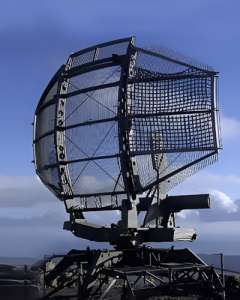
Figure 1: TIGAR



| Specifications | |
|---|---|
| frequency: | 2 900 … 3 100 MHz
(S band) |
| pulse repetition time (PRT): | |
| pulse repetition frequency (PRF): | |
| pulsewidth (τ): | |
| receiving time: | |
| dead time: | |
| peak power: | |
| average power: | |
| instrumented range: | 240 NM (≙ 445 km) |
| range resolution: | |
| accuracy: | |
| beamwidth: | |
| hits per scan: | |
| antenna rotation: | |
| MTBCF: | |
| MTTR: | |
TIGAR
TIGAR (T SS I ntegrated G round-Based A ir R adar) is operating in the S band (IEEE designation) or in the E/F band (NATO designation) 3D tactical air surveillance radar. This mobile radar is an upgraded and modernized version of the older AN/TPS-43, transforming it into a next-generation system at a cost-effective price.
The modernization process includes the replacement of critical electrical and mechanical assemblies on the radar antenna pedestal, the transmitter’s power amplifier assembly, and the installation of new touch consoles for operators. Additionally, upgrades have been made to the radar processor, power distribution system, IFF interrogator, radar signal generator, and ADS-B receiver.
TIGAR is comparable with newer radarsystems such as the AN/TPS-70 and AN/TPS-75. It is customized for the Ecuadorian Air Force.
Source: