
Propagation speed of electromagnetic waves
The speed of light is the speed at which light and other electromagnetic waves travel in a vacuum. It is precisely 299,792,458 meters per second. This is a fundamental natural constant, representing the absolute maximum speed at which energy (i.e., information) and matter can travel through space — a core principle of Albert Einstein's theory of relativity.
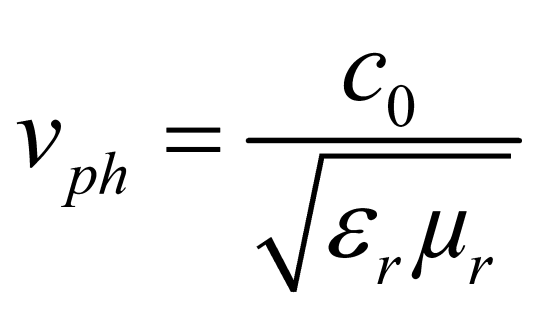
This maximum speed also applies to the transmission of energy and echo signals in radar systems. However, reaching this maximum speed is only possible in a vacuum, so it applies to satellite-based radar devices. In a homogeneous medium, the wave travels at a lower speed, which can be calculated using
(1)
- c0 = speed of light in a vacuum
- εr = relative permittivity
- µr = relative permeability
The propagation speed also depends on the density of the medium.
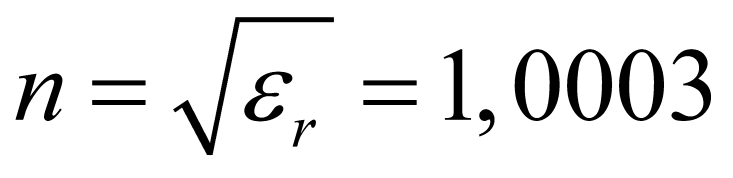
Near the ground, the permeability of air is approximately 1, and the refractive index is
(2)
This means that the speed of light near the ground is 299,704,058 meters per second, or only 99.97 percent of the speed of light in a vacuum.