
Appendix: “Semiconductor Technology”

Figure 1: Preview of the web page
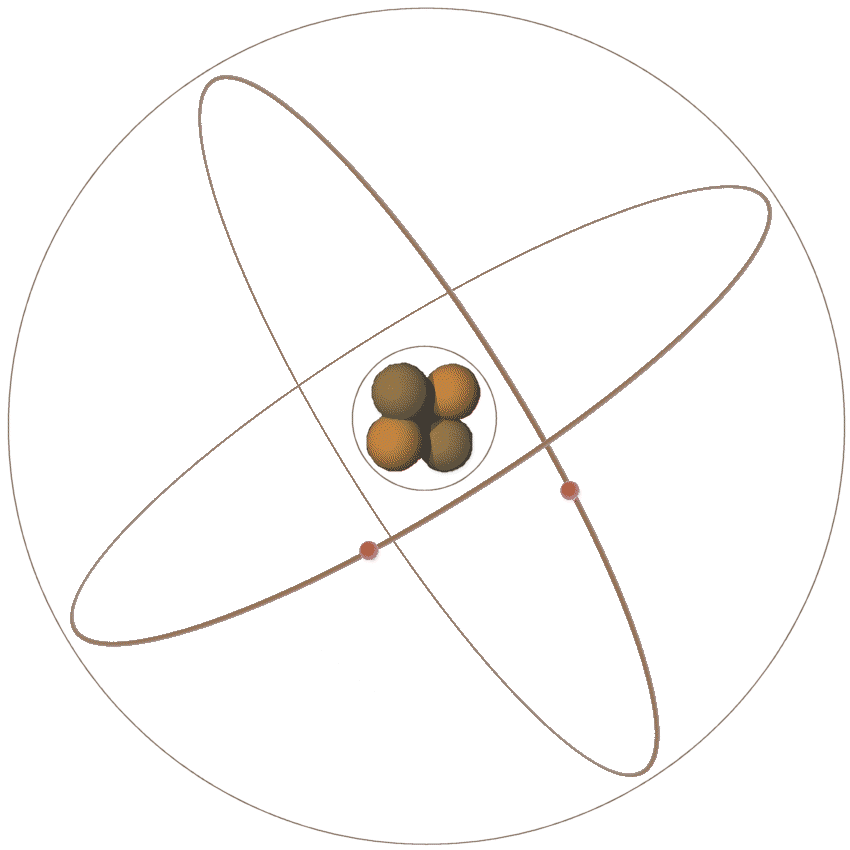
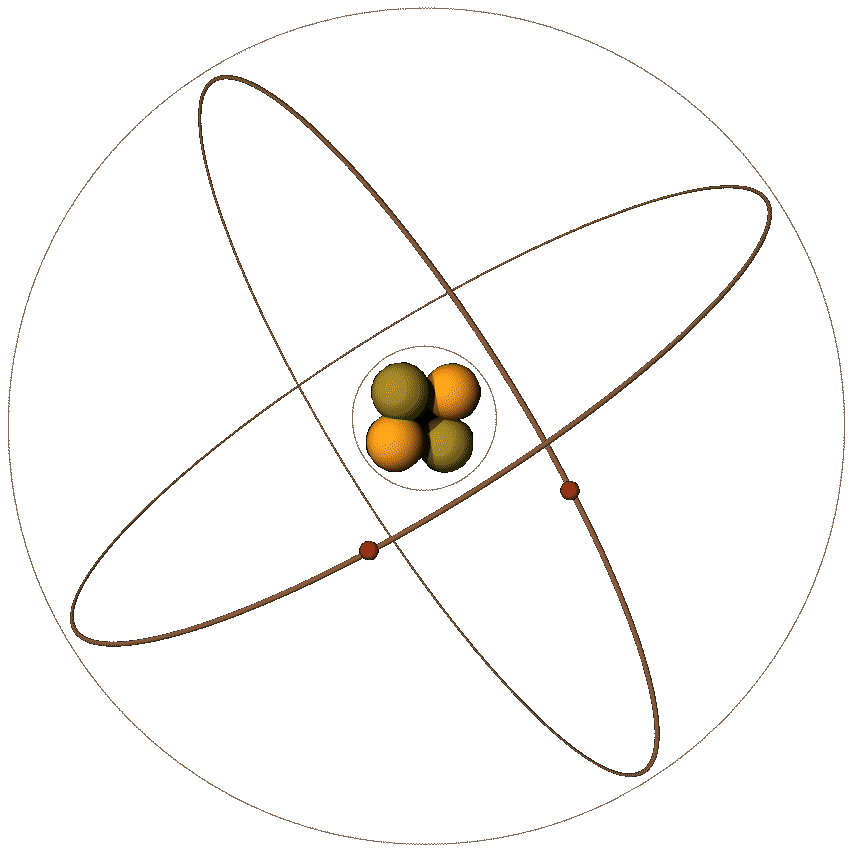
Figure 2: Structure of a helium atom according to the Bohr atomic model
This appendix is intended to provide a brief overview of semiconductor technology as a refresher on physics lessons from many years ago. Please note that this website is considerably older than Wikipedia. When these pages were created, they were unique on the Internet. The purpose here is really only to provide an overview and an understanding of the applications of semiconductor devices. This was and still is necessary because in the military, personnel often have to work on radar systems while having only limited basic knowledge of physics.
As the name already suggests, semiconductors lie somewhere between conductors and non-conductors (insulators) in terms of their electrical properties. Two of the best-known semiconductor devices are the diode and the transistor. These semiconductor devices also fall under the designation solid-state devices. These solid-state devices are simply electronic components whose operation is based on the movement of electrons in semiconductor crystals.
To understand how these semiconductor devices operate, the structure and composition of semiconductor crystals must be considered. Knowledge of atomic structure is also a fundamental prerequisite for understanding the operation of solid-state devices that are now used as modules in modern radar equipment.