
AN/APG-53
Description of the radar set, tactical-technical characteristics
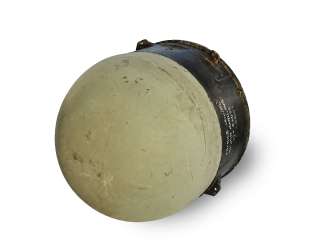
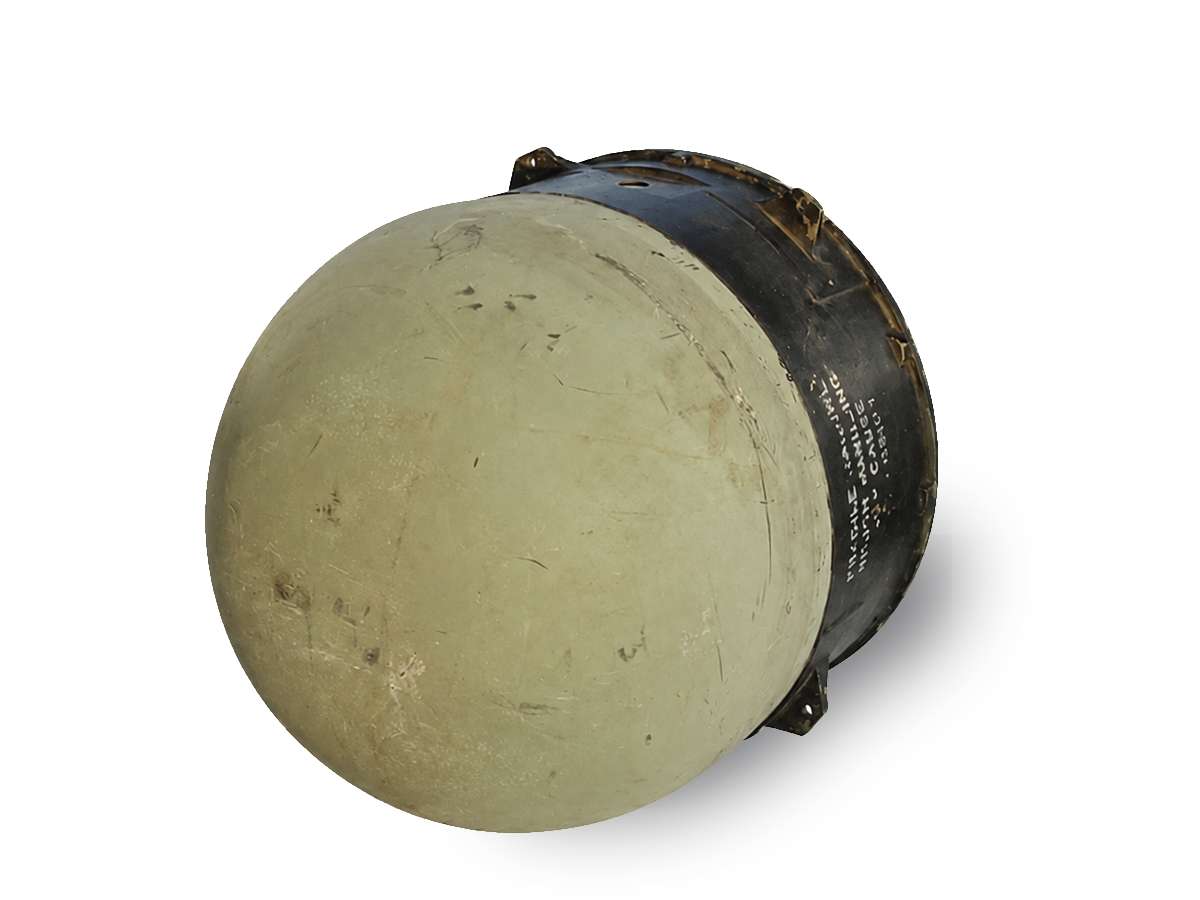
Figure 1: AN/APG-53


| Specifications | |
|---|---|
| frequency: | 9 375 ± 30 MHz
(X band) |
| pulse repetition time (PRT): | |
| pulse repetition frequency (PRF): | 300 or 1 500 Hz |
| pulsewidth (τ): | 0.35 µs |
| receiving time: | |
| dead time: | |
| peak power: | |
| average power: | |
| instrumented range: | 20 NM (≙ 37 km) --> |
| range resolution: | |
| accuracy: | ± 23 m or 2%; ± 1° |
| beamwidth: | |
| hits per scan: | |
| antenna rotation: | |
| MTBCF: | |
| MTTR: | |
AN/APG-53
The AN/APG-53 was initially designed to support precision bombing and was intended solely to measure the exact slant range to the ground target. It operated in the X band (IEEE designation) or the I band (NATO designation). The improved version, the AN/APG-53A, was also used for navigation and obstacle warning during low-altitude flight in poor visibility. The AN/APG-53 and 53A were used in the Douglas A-4D through A-4M Skyhawk.
The radar used a symmetrical parabolic reflector with a diameter of 40 cm (≙ 15 7/8 inches). The antenna could be swiveled to an azimuth angle of ± 30°. The display was a B-scope with a 7176 tube having a diameter of 14 cm (≙ 5 5/8 inches).