
AN/FPS-78
Description of the radar set, tactical-technical characteristics
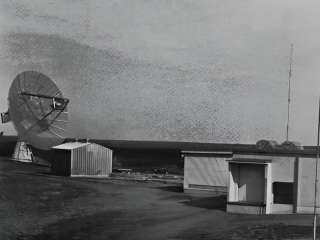
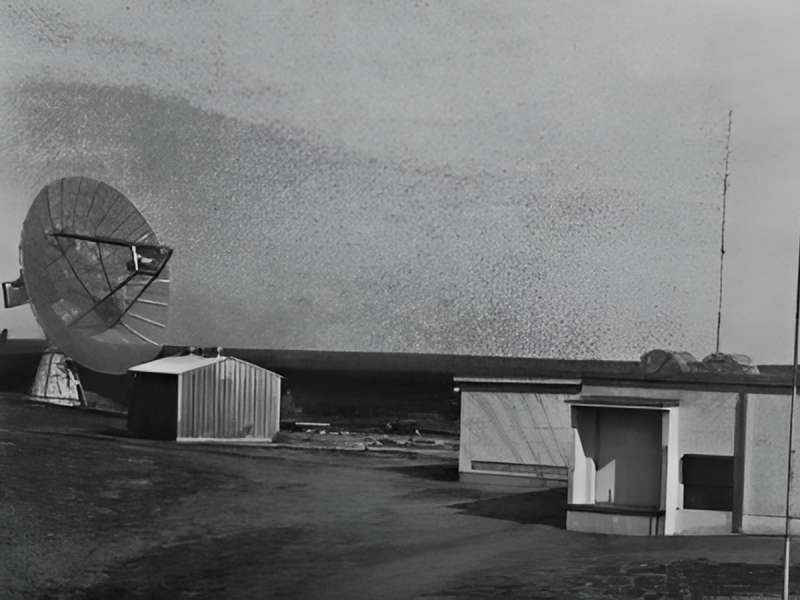
Figure 1: AN/FPS-78
 Hersteller:
General Electric
| Specifications | |
|---|---|
| frequency: | 186 … 207 MHz
(VHF band) |
| pulse repetition time (PRT): | |
| pulse repetition frequency (PRF): | |
| pulsewidth (τ): | |
| receiving time: | |
| dead time: | |
| peak power: | |
| average power: | |
| instrumented range: | |
| range resolution: | |
| accuracy: | |
| beamwidth: | |
| hits per scan: | |
| antenna rotation: | |
| MTBCF: | |
| MTTR: | |
AN/FPS-78
AN/FPS-78 was a mechanical scanning air surveillance radar operating in the VHF band (IEEE designation) or in the A band (NATO designation). It determined the presence and location of unknown airborne objects.
During the Cuban Missile Crisis in 1962, the AN/FPS-78 was a critical part of the “Falling Leaves” network to monitor the trajectories of potential missile launches from Cuba. It was decommissioned in the mid-1960s.
Source:
- Military Standardization Handbook, United States Radar Equipment Manual TM 11-487C-1 1965, p. 138f