Type 982
Description of the radar set, tactical-technical characteristics
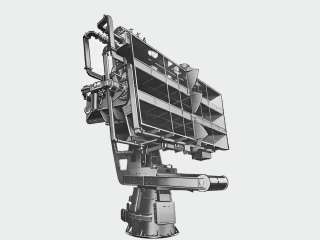
Figure 1: Antenna AQS of the radar Type 982

UNITED KINGDOM
| Specifications | |
|---|---|
| frequency: | 3 GHz
( S band) |
| pulse repetition time (PRT): | |
| pulse repetition frequency (PRF): | 500 Hz |
| pulsewidth ( τ): | 0.7 or 1.9 µs |
| receiving time: | |
| dead time: | |
| peak power: | 500 kW |
| average power: | |
| instrumented range: | 80 NM (≙ 148 km) |
| range resolution: | |
| accuracy: | |
| beamwidth: | 2,2° |
| hits per scan: | |
| antenna rotation: | 0 … 7 min⁻¹ |
| MTBCF: | |
| MTTR: | |
Type 982
Type 982 was an air surveillance radar operating in the S band (IEEE designation) or in the E/F band (NATO designation).
The AQS antenna consisted of three stacked “cheese antennas” with slightly different tilt, which scanned different elevation angles.
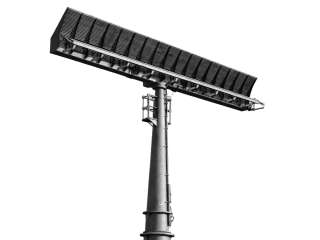
The radar was put into service around 1955 and was often used in conjunction with the Type 983 height finder. The AQS antenna (Figure 1) was later replaced by the AKR antenna. This was a cylindrical parabolic antenna measuring 26.5 × 3 feet (≙ 8 × 1 m) with a squintless feed, which provided a narrower antenna pattern of about 1°.