Dunay-1
Description of the radar set, tactical-technical characteristics


former Soviet Union
| Specifications | |
|---|---|
| frequency: | VHF band |
| pulse repetition time (PRT): | |
| pulse repetition frequency (PRF): | |
| pulsewidth (τ): | |
| receiving time: | |
| dead time: | |
| peak power: | |
| average power: | |
| instrumented range: | |
| range resolution: | |
| accuracy: | |
| beamwidth: | |
| hits per scan: | |
| antenna rotation: | |
| MTBCF: | |
| MTTR: | |
Dunay-1
The Dunay-1 (Cyrillic: «Дунай-1») was a test radar from 1955 operating in the VHF band (IEEE designation) or VHF band (NATO designation) as a continuous wave radar as part of the development of an early warning radar for the former Soviet Union’s «A» anti-ballistic missile (ABM) system.
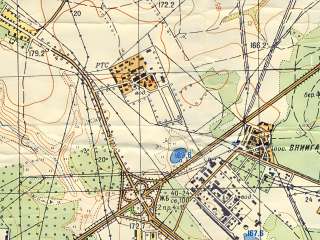
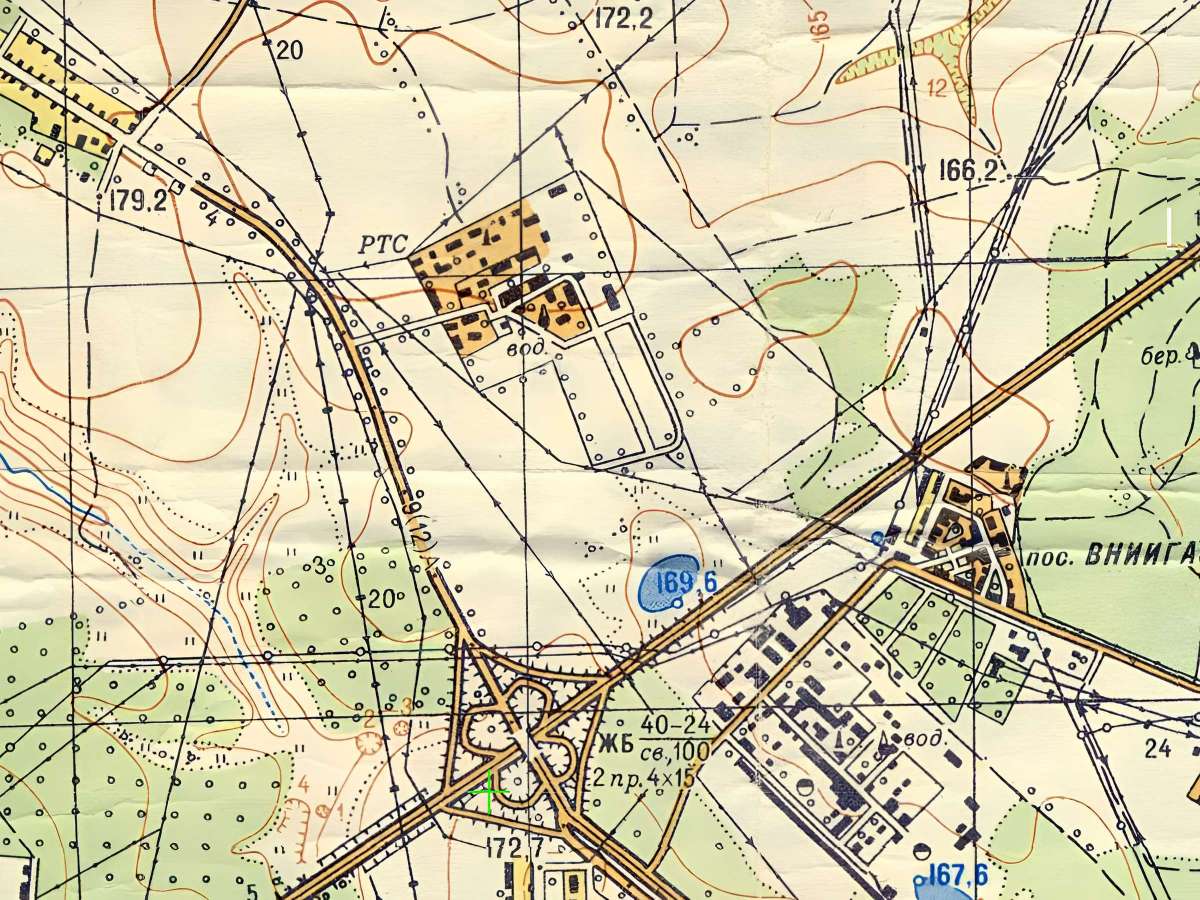
The former location was most likely 55°36’04.9" N 37°43’36.3" E, then located on the outskirts of Moscow, current status: heavily built-up (residential area of Orehovo-Borisovo Yuzhnoye, south Moscow).
Source:
- General Staff Map of the USSR, Sheet M-37-36-Б (1962 edition), map annotation: “РТС” (радиотехническая станция)