
AN/APS-1
Description of the radar set, tactical-technical characteristics
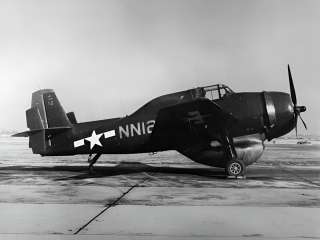
Figure 1: Grumman TBM-3W Avenger with the AN/APS-1


| Specifications | |||
|---|---|---|---|
| (XN-1) | (XN-2) | ||
| frequency: | 9 375 MHz
(X band) |
24 GHz
(K band) | |
| pulse repetition time (PRT): | |||
| pulse repetition frequency (PRF): | 400 Hz | ||
| pulsewidth (τ): | |||
| receiving time: | |||
| dead time: | |||
| peak power: | 1,2 kW | ||
| average power: | |||
| instrumented range: | 42 NMNM (≙ 78 km) | ||
| range resolution: | |||
| accuracy: | |||
| beamwidth: | |||
| hits per scan: | |||
| antenna rotation: | |||
| MTBCF: | |||
| MTTR: | |||
AN/APS-1
Several radar sets can be found under the designation AN/APS-1.
The AN/APS-1(XN-1) was operating in X band search, mapping and bombing radar, developed in 1944. It was installed in several aircraft types, either under the fuselage or partially above the fuselage. The radar was later replaced by the AN/APS-20.
The AN/APS-1(XN-2) is similar except for the high-frequency modules, but uses the X band. However, its range remained below expectations due to the higher attenuation in this frequency band. This radar was then used as AN/APS-1A tail warning radar. Although atmospheric attenuation was high, this frequency range had the benefit of being undetectable by the enemy at that time.