
AN/APQ-7
Description of the radar set, tactical-technical characteristics
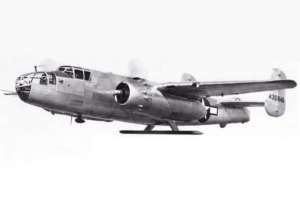
Figure 1: B-29 Superfortress with AN/APQ-7 radar vane

 Hersteller:
MIT’s Radiation Laboratory
| Specifications | |
|---|---|
| frequency: | 9 316 MHz
(X band) |
| pulse repetition time (PRT): | |
| pulse repetition frequency (PRF): | |
| pulsewidth (τ): | |
| receiving time: | |
| dead time: | |
| peak power: | |
| average power: | |
| instrumented range: | |
| range resolution: | |
| accuracy: | |
| beamwidth: | |
| hits per scan: | |
| antenna rotation: | |
| MTBCF: | |
| MTTR: | |
AN/APQ-7
AN/APQ-7 “Eagle” was operating in the X band radar bombsight system in late 1944 intended primarily for high altitude use (25,000 ft). Its first operational deployment was with the B-29 Superfortress in the Pacific Theater, starting in May 1945.
The system features a 16-foot linear array of dipoles housed in a specialized wing-like nacelle. It was the first airborne phased array radar to be scanned electromechanically, providing coverage in a 60-degree sector centered on the forward direction.
Source:
- Summary Technical Report of the National Defense Research Committee, United States,ADB 218220