
AN/APQ-81
Description of the radar set, tactical-technical characteristics
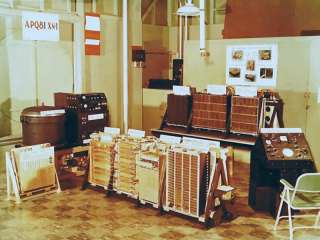
Figure 1: AN/APQ-81


| Specifications | |
|---|---|
| frequency: | 5 260 … 5 650 MHz
(C band) |
| pulse repetition time (PRT): | |
| pulse repetition frequency (PRF): | 56.8, 62.5, and 69.5 kHz |
| pulsewidth (τ): | 1.6 µs |
| receiving time: | |
| dead time: | |
| peak power: | 20 kW |
| average power: | 2 kW |
| instrumented range: | 112 NM (≙ 207 km) |
| range resolution: | |
| accuracy: | |
| beamwidth: | 2.7° |
| hits per scan: | |
| antenna rotation: | |
| MTBCF: | |
| MTTR: | |
AN/APQ-81
AN/APQ-81 was operating in the C band (IEEE designation) or in the G band (NATO designation) pulse-doppler radar for the Douglas XF6D-1 Missileer. It was the first track-while-scan radar developed for a fighter aircraft. It uses a high-PRF-mode to calculate the range using three different PRFs.
As the development of the F6D was canceled, this radar never went into series production.