
ARS-400
Description of the radar set, tactical-technical characteristics
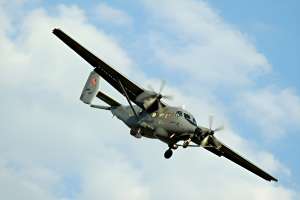
Figure 1: The maritime patrol aircraft An-28B 1R (M28 Bryza) with the ARS-400

 Przemysłowy Instytut
Telekomunikacji S.A. (Gdańsk)
| Specifications | |
|---|---|
| frequency: | 9.2 … 9.5 GHz
(X band) |
| pulse repetition time (PRT): | |
| pulse repetition frequency (PRF): | |
| pulsewidth (τ): | |
| receiving time: | |
| dead time: | |
| peak power: | |
| average power: | |
| instrumented range: | 130 NM (≙ 240 km) |
| range resolution: | 15 m (SAR- stripline mode) |
| accuracy: | |
| beamwidth: | |
| hits per scan: | |
| antenna rotation: | |
| MTBCF: | |
| MTTR: | |
ARS-400
ARS-400 is operating in the X band (IEEE designation) or in the I band (NATO designation) multimode maritime radar with surveillance and Synthetic Aperture Radar (SAR) imaging modes with stopped antenna. In the surveillance mode with rotating antenna it is capable of tracking up to 100 sea targets. It is mounted in a radome under the fuselage of maritime patrol aircraft.
The pulse compression system features a traveling wave tube transmitter and multichannel signal processing for sea surface target detection, ground mapping, and weather and oil pollution monitoring.
ARS-400 was developed in 1997. An upgraded version got the designator ARS-800.