
AN/APY-11
Description of the radar set, tactical-technical characteristics
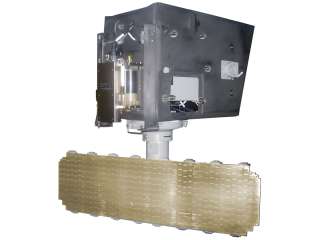
Figure 1: AN/APY-11


| Specifications | |
|---|---|
| frequency: | X band |
| pulse repetition time (PRT): | |
| pulse repetition frequency (PRF): | |
| pulsewidth (τ): | |
| receiving time: | |
| dead time: | |
| peak power: | |
| average power: | |
| instrumented range: | 200 NM (≙ 370 km) |
| range resolution: | |
| accuracy: | |
| beamwidth: | |
| hits per scan: | |
| antenna rotation: | |
| MTBCF: | |
| MTTR: | |
AN/APY-11
The AN/APY-11 is operating in the X band (IEEE designation) or in the I band (NATO designation) multi-mode radar performing 360° azimuth surface surveillance, classification, and SAR and ISAR imaging of ships, terrain and coastal features. It is capable of detecting and tracking ships, aircraft, ground moving vehicles, and Search and Rescue transponders. The radar can provide cueing for Electro-Optical and Infra-Red (EO/IR) payloads.
The U.S. Coast Guard uses the AN/APY-11 to intercept drug smugglers, locate stranded boats and track ice in the North Atlantic. The radar has also been used to support the mapping of oil spills of national significance, such as the Deep Water Horizon oil spill in the Gulf of Mexico.